
Clinics can use multiple strategies at the same time when marketing plasma pen treatments to clinic patients, provided each channel communicates a consistent, clinically responsible message. A focused mix is more useful than relying on one channel alone: it can introduce the treatment, answer patient questions and make safety information easy to find.
Interest in an aesthetic procedure often comes with practical questions about suitability, what treatment involves, healing and potential risks. Patients need clear information before deciding whether to book a consultation, not promotional language that makes outcomes sound certain. Consistent messages across channels help set realistic expectations.
This article explains how to coordinate educational content, digital and in-clinic communication, and patient conversations while keeping the information clear. Learn how to describe the treatment and its limits, communicate safety information transparently and build a coherent approach that supports informed decisions and patient trust.
Key Takeaways
- Coordinate digital, in-clinic and consultation messaging so patients encounter consistent information at each stage of their decision.
- Make education part of the patient journey by clearly explaining the procedure, expected healing and relevant limitations.
- Communicate safety measures in plain language, including how assessment, consent and aftercare support informed decisions.
- Explain how plasma pen technology works and discuss suitability based on each patient’s concerns and clinical circumstances.
- Explore Jett Medical Canada’s Jett Plasma Pen Medical when considering plasma technology for a clinic’s treatment offering.
Combining marketing strategies
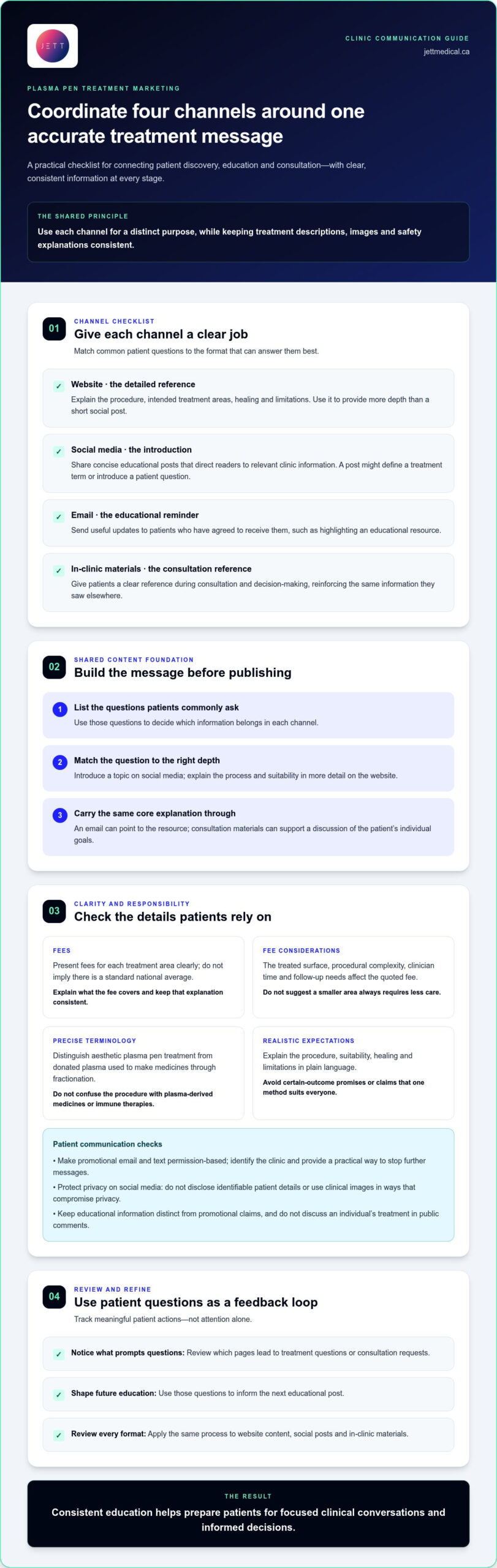
Clinics can use multiple marketing channels when each supports the same accurate treatment message. A coordinated approach to marketing plasma pen treatments to clinic patients connects discovery, education and consultation without relying on a single advertisement. For example, a clinic website can explain treatment areas, while social posts direct readers to that information. In-clinic materials can reinforce the same points during consultations.
Start with a shared content plan. List the questions patients commonly ask, then match each one to the most useful channel. A social post can introduce a topic, while a website page explains it in more depth. Email can point existing patients to educational resources, and consultation materials can support an informed discussion. Keep descriptions, images and safety explanations consistent across formats.
- Website: Explain the procedure, intended treatment areas, healing and limitations.
- Social media: Share concise educational posts that lead to relevant clinic information.
- Email: Send useful updates to patients who have agreed to receive them.
- In-clinic materials: Give patients a clear reference during consultation and decision-making.
Give each channel a distinct purpose instead of copying promotional text everywhere. A social post might define a treatment term; a website article can explain the process and suitability. An email can highlight the article, while a consultation addresses the patient’s individual goals. This approach gives patients different ways to learn without overstating results.
For Canadian clinics, present fees for each treatment area clearly rather than implying there is a standard national average. The treated surface, procedural complexity, clinician time and follow-up needs all affect the quoted fee. Explain what the fee covers in clinic materials, and keep that explanation consistent across the website, email and consultation. Don’t suggest that treating a smaller area always requires less care.
Use precise terminology to avoid confusion with blood plasma and plasma-derived medicines. Donors, immune therapies, global supply and manufacturing describe a different medical context from plasma pen treatment. Make this distinction clear in public-facing content, especially when discussing plasma-related topics. Review each draft for accurate language, then use the same core explanation wherever patients encounter it.
Track meaningful patient actions, not just attention. Review which pages prompt questions about treatment or consultation requests, then shape the next educational post around those questions. Apply the same review process to website content, social posts and in-clinic materials. This creates a practical feedback loop: patient questions inform content, and consistent content prepares patients for focused clinical conversations.
Patient education
Patient education should explain the treatment, compare relevant options and make communication clear across clinic channels. In Canada, an informed discussion helps patients assess whether a procedure fits their goals.
How plasma pen treatments work
A plasma pen treatment uses a device to apply plasma technology to a selected skin area. This distinction matters because patients may confuse aesthetic treatments with plasma-derived medicines. Donated plasma is used to make medicines through fractionation, a separate process from an aesthetic procedure. Explain what the clinic’s treatment addresses, how consultation works and what information patients receive before deciding.
Use plain language in every format. A website description can introduce the technology, while a consultation clarifies the proposed treatment area and answers individual questions. Don’t imply that a skin treatment prevents or treats diseases. Clear distinctions help patients understand the procedure without confusing it with immune therapies or other products made from donated plasma.
Benefits and limitations compared with other procedures
Explaining benefits and limits helps patients understand what a treatment may offer and how it differs from alternatives. This comparison keeps the focus on suitability rather than promotional claims. Plasma pen treatments may interest patients considering a non-surgical approach to selected skin concerns, while other procedures use different techniques and may suit different goals. Don’t present one method as universally superior.
Explain the factors behind a comparison, such as the concern being treated, the area involved, recovery expectations and the patient’s priorities. A clinic can provide a neutral overview of approaches, then discuss the considerations that matter to the individual. Don’t promise a specific degree of tightening or suggest that one treatment replaces every alternative. Clear limits support better-informed decisions.
Canadian rules for patient communications
Canadian patient communications should use permission-based promotional email and text, identify the clinic clearly and provide a practical way to stop further messages. Patients should control whether marketing reaches them. Social media requires care, too: don’t disclose identifiable patient details or use clinical images in ways that compromise privacy.
Keep educational information distinct from promotional claims. A clinic post, for example, can connect a treatment description to a consultation option without implying that every reader is suitable. Keep patient information within appropriate clinic channels, and don’t discuss an individual’s treatment in public comments. These practices make communication respectful and help protect private health information.
Ethical promotion to existing patients
Ethical promotion gives existing patients relevant information without turning a clinical relationship into pressure to buy. Trust depends on a patient’s ability to make a voluntary, informed choice. Share treatment details when a patient’s expressed interests make them relevant, and make clear that reading a message creates no obligation to book.
Use balanced language in email, text and consultation materials. Explain the intended purpose, limitations and next steps instead of relying on urgency or dramatic before-and-after claims. Give patients time to consider the information and ask questions. If a patient asks about other skin-tightening options, discuss them fairly rather than framing the plasma pen as the only option worth considering.
Safety and quality measures
Safety communication should distinguish an aesthetic procedure from plasma-derived medicines and accurately describe clinic practices. Patients need useful information to assess claims, practitioner qualifications and the treatment process.
In Canadian advertising, use accurate, supportable claims and avoid guarantees or statements suggesting every patient will achieve the same result. Who may perform a plasma pen treatment depends on provincial requirements, the practitioner’s regulated scope and the procedure. Assign treatment only to practitioners whose authorized scope and training cover the work.
Use plasma-related terminology carefully. A plasma pen treatment is not the collection of plasma from donors or the manufacture of a plasma protein product. Fractionation separates donated plasma into proteins, including components used to make immune globulin. These products can support patients with immune disorders, but they are distinct from an aesthetic procedure called plasma pen treatment. Clear language prevents patients from assuming the purposes or evidence are shared.
Build quality into the patient journey. Before promotion or treatment, document the device and procedure being discussed, the practitioner’s role, the patient’s goals and the information provided. During consultation, explain the proposed treatment area, expected healing, relevant risks and aftercare. Record the patient’s questions and consent, then provide written instructions that match the discussion. Consistent records help identify communication gaps and improve clinic processes.
- Review claims: Remove guaranteed outcomes and unsupported comparisons from each advertisement.
- Check practitioner scope: Match the procedure to the practitioner’s authorized professional role and training.
- Explain the plan: Document the treatment area, consent discussion and aftercare guidance.
- Keep terminology distinct: Separate aesthetic treatment descriptions from plasma-derived medicines and their uses.
Apply the same review standard to website pages, social posts, printed brochures and consultation scripts. If an advertisement describes a cosmetic concern, for example, the consultation should clarify what the procedure is intended to address without expanding the claim. Don’t use disease terminology to make an aesthetic treatment sound medically necessary. Clear explanations of material facts support patient understanding and preserve the integrity of clinic communications.
Quality also depends on a consistent review process. Assign responsibility for checking public-facing content, update materials when treatment information changes and train staff to answer common questions consistently. If a patient raises a concern about a claim or procedure, document it and review the relevant wording. This keeps safety communication aligned with clinic practice.
Under the Plasma Protein Therapeutics Association’s International Quality Plasma Program criteria, prospective donors must provide two donations with negative disease test results to qualify. Justice Horace Krever’s 1997 report sought to ensure the safety of Canada’s blood supply.
What is a plasma pen treatment and how does it work?
A plasma pen treatment uses a device that applies direct-current plasma technology to a selected area. Understanding this basic mechanism helps patients know what the procedure involves and what “plasma” means in this context.
Here, plasma refers to the technology used by the device, not donated blood plasma. The treatment is different from plasma collection and plasma-derived medicines. Explain the distinction before discussing a patient’s concern, such as wrinkles, pigmentation or scars. Precise terminology helps patients understand the proposed service without confusing it with blood products or immune therapies.
Treatment begins with a clinical discussion about the area and the patient’s goals. The practitioner assesses the concern, explains the proposed approach and discusses relevant limitations. For example, a patient asking about a facial wrinkle needs information specific to that area, not a general claim about every skin concern. The treatment plan should state what the device is intended to address.
Direct-current plasma technology is the defining feature of this treatment approach. The device applies the technology in a controlled manner to the selected area. Patients should receive a clear explanation of how the clinic uses the device, what they may experience during treatment and what care follows. Avoid adding technical explanations that the clinic cannot support with accurate device information.
For patient-facing materials, separate three ideas:
- Technology: Explain that the device uses direct-current plasma technology.
- Purpose: Name the specific concern under discussion, such as wrinkles or scars.
- Process: Describe the consultation, treatment plan and aftercare information provided by the clinic.
This structure gives website readers a useful overview while reserving individualized assessment for consultation. For instance, a page about pigmentation shouldn’t imply that every type or cause is treated in the same way. Use accurate descriptions tied to the treatment being discussed, and avoid guarantees or broad claims about results.
Clinics should also explain what the treatment is not. It is not a plasma transfusion, and it does not involve fractionation or the manufacture of plasma protein products. Those terms describe separate processes involving donated plasma. A concise distinction is useful in brochures, consultation scripts and social posts, where the word “plasma” could otherwise cause confusion.
Patient education works best when it follows a consistent sequence: define the device technology, identify the concern, describe the clinic’s proposed process and clarify relevant limits. This gives patients a grounded starting point for questions and keeps public descriptions aligned with the actual treatment discussion.
Which patients are suitable for plasma pen treatments, and who should avoid them?
Suitability depends on the patient’s concern, treatment area, health history and expectations. A clinic should assess these factors before presenting plasma pen treatment as an option. This helps distinguish someone seeking information from a patient whose goals, current skin condition or care needs call for a different approach.
A suitable discussion starts with the concern the patient wants addressed. Someone asking about wrinkles, for example, needs an assessment of the specific area and a clear explanation of the treatment’s intended purpose. The clinician should also review relevant health history, current skin condition and healing considerations. These details help shape a plan around the individual rather than a general promotional description.
Patient expectations matter, too. Anyone looking for a guaranteed result or a complete solution to every skin concern needs a realistic discussion before deciding. Explain what the treatment is intended to address, its limits and what the consultation can determine. Don’t promise a particular degree of change or suggest the same approach suits every patient.
Some circumstances call for postponing a decision or considering another approach. For instance, an unresolved skin concern in the proposed treatment area may need assessment before discussing an aesthetic procedure. A patient whose goals fall outside the treatment’s intended use may benefit from learning about other options. The clinic’s role is to recognize these differences, explain them clearly and avoid turning every enquiry into a treatment recommendation.
- Clarify the goal: Ask what concern the patient wants addressed and which area matters to them.
- Review relevant context: Discuss health history, current skin condition and healing considerations.
- Set expectations: Explain intended use and limitations without promising a specific outcome.
- Consider the next step: Determine whether treatment discussion, further assessment or another approach fits the situation.
Marketing materials should reflect this individualized assessment. A website can describe the concerns a treatment may address, but it shouldn’t label every reader a candidate. A social post about a particular area, for example, can invite patients to learn about suitability instead of implying that the procedure is right for everyone. This keeps educational content informative and prevents promotion from standing in for assessment.
Patients should also have room to decide without pressure. If someone is uncertain, provide clear information and allow time for questions. If their concern requires a different assessment, explain that distinction rather than encouraging a booking that doesn’t fit their needs. Clinics developing treatment pathways can explore plasma pen technology for clinical use alongside these patient-centred suitability considerations.
Jett Medical Canada: Jett Plasma Pen Medical
Jett Medical Canada supplies the Jett Plasma Pen Medical for clinics considering plasma technology as part of their treatment offering. Its product range also includes Jett Plasma Lift Medical, Jett Plasma Medical II and Edge EOM-P EVO. These devices are designed for professional clinical applications, giving clinics options to consider based on intended use and patient-care needs.
Jett Medical Canada’s products are Health Canada licensed and hold CE certification and MDSAP approval, alongside other international certifications. This information can support a clinic’s review of device documentation as it develops treatment protocols and patient education materials. The appropriate device depends on the clinic’s intended application and clinical requirements.
For information about plasma pen devices for clinical use, visit jettmedical.ca or contact Jett Medical Canada.
Build a patient-first plan for your clinic
Use your next planning session to make marketing plasma pen treatments to clinic patients a consistent part of the patient experience. Map the information patients need before consultation, while deciding and after treatment. Then review each communication for clarity, accuracy and alignment with the care your clinic provides. This creates a practical framework your team can maintain as questions and clinic priorities evolve.
For clinics evaluating plasma technology, Jett Medical Canada offers Jett Plasma Pen Medical, Jett Plasma Lift Medical and Jett Plasma Medical II. Consider how a device fits your clinical objectives and the patient education your team plans to provide. A deliberate evaluation can connect technology choices with responsible communication and patient-centred care.
Contact Jett Medical Canada to discuss plasma pen devices for clinical use and take the next step towards a thoughtful, well-informed approach.
Frequently Asked Questions
Can I use multiple strategies simultaneously, or should I focus on one at a time?
You can use several strategies at once if each has a defined role and consistent information. For example, an educational email can introduce a topic while a website provides a detailed explanation. Plan related content together, then review enquiries and patient questions to identify where clarification is needed. If you change several messages at once, it becomes harder to tell which wording prompted questions or confusion.
What clinical evidence supports the safety and effectiveness of plasma pen treatments?
Assess evidence for the specific device, intended use and outcome being promoted, rather than treating all plasma pen procedures as interchangeable. Jett Medical Canada describes its plasma technology as backed by clinical research across specialties. Claims should be supported by evidence relevant to the treatment area and outcome discussed, including information on effectiveness and safety. Don’t turn evidence for one use into a promise about another.
What are the risks, side effects, contraindications, and aftercare requirements?
These vary according to the device, treatment area and patient’s health factors, so patients need information specific to the proposed procedure. Before consent, explain relevant side effects and risks, identify contraindications affecting the patient and provide clear written aftercare instructions. For example, a patient considering treatment near a sensitive area needs guidance specific to that site, not a generic cosmetic-treatment handout. Patients should understand the care plan before proceeding.