
With an estimated 8.2 million Canadians currently affected by Dry Eye Disease, nearly half of whom remain undiagnosed, the demand for a definitive clinical solution has never been higher. You likely recognize the frustration of managing patients who rely on artificial tears for temporary relief, only to return with persistent symptoms of meibomian gland dysfunction. Integrating ophthalmic plasma technology for dry eye into your practice offers a sophisticated path beyond palliative care. This guide explores how patented direct current plasma technology is revolutionizing the treatment of MGD and blepharitis by providing a non-ablative, precise modality that addresses the root cause of ocular surface inflammation. We’ll examine the clinical efficacy of Health Canada licensed devices like the Jett Plasma Lift Medical, provide a clear framework for calculating your return on investment, and outline the seamless integration of this technology into your existing clinical workflow. By the end of this guide, you’ll have the technical confidence to transition from managing chronic symptoms to achieving measurable, long-term patient outcomes through validated international innovation.
Key Takeaways
- Understand the critical scientific distinction between direct current and alternating current to ensure maximum safety and precision during delicate eyelid margin procedures.
- Identify the essential regulatory requirements for Canadian practitioners, including the necessity of Health Canada Class 3 licensing and MDSAP certification for medical devices.
- Learn how to evaluate ophthalmic plasma technology for dry eye by comparing its clinical versatility and patient outcomes against traditional thermal pulsation treatments.
- Discover how integrating patented DC plasma technology allows a single device to address multiple conditions, including meibomian gland dysfunction, blepharitis, and xanthelasma.
Addressing the Evaporative Dry Eye Crisis in Canadian Clinical Practice
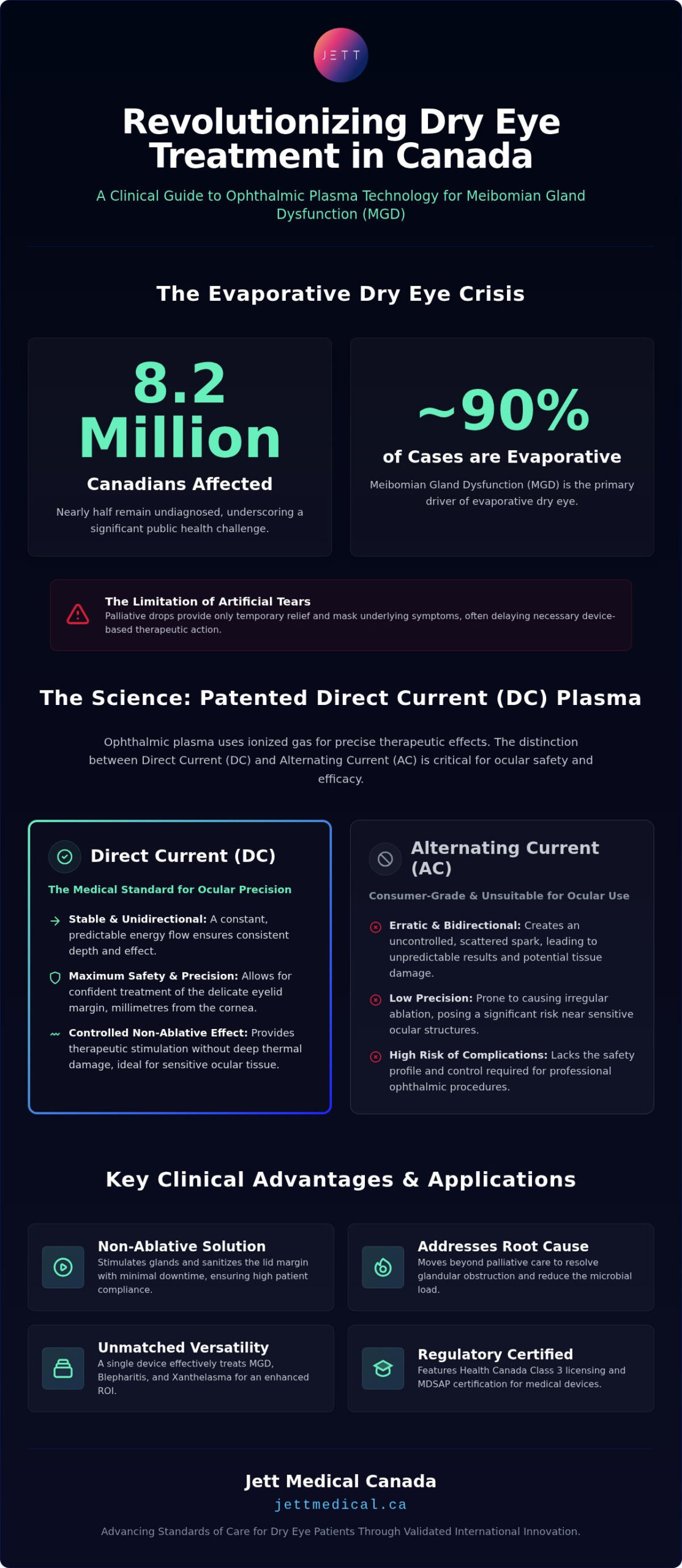
Approximately 8.2 million Canadians currently live with Dry Eye Disease, a statistic that underscores a growing public health challenge. For many of these individuals, the condition isn’t merely a minor irritation but a significant barrier to daily productivity and ocular comfort. Clinical research indicates that Meibomian Gland Dysfunction (MGD) is the primary driver in nearly 90% of evaporative dry eye cases. While artificial tears were once the gold standard for initial intervention, clinical evidence now suggests that they often delay necessary therapeutic action by providing a false sense of resolution. These drops don’t resolve the underlying glandular obstruction; they simply mask the symptoms for a brief period. This therapeutic gap has led to a decisive shift toward device-based interventions. Modern practitioners now realize that ophthalmic plasma technology for dry eye represents the next evolution in clinical care, moving beyond palliative drops toward definitive, long-term results.
The Pathophysiology of MGD and Blepharitis
The progression of evaporative dry eye is often rooted in a cycle of meibum stasis and gland blockage. When the meibomian glands fail to secrete healthy lipids, the tear film evaporates prematurely, leaving the ocular surface exposed and vulnerable. This stasis often triggers chronic inflammation of the eyelid margin, which further compromises gland function. Complications are frequently exacerbated by Demodex blepharitis, where microscopic mites colonize the lash follicles and contribute to toxic tear syndrome. Without a targeted intervention to clear these obstructions and reduce the microbial load, the inflammation becomes self-perpetuating. It’s no longer enough to simply lubricate the eye; clinicians must actively restore the health of the eyelid margin to stabilize the tear film.
The Clinical Need for Non-Ablative Solutions
As patient expectations evolve, the demand for procedures with minimal downtime has surged. While traditional thermal pulsation treatments have paved the way, many specialists now seek more versatile, non-ablative solutions that can address both MGD and co-morbidities like blepharitis or xanthelasma. Patients don’t want invasive surgical options that require lengthy recovery periods. They expect efficient, office-based procedures that allow them to return to their normal routines immediately. By adopting ophthalmic plasma technology for dry eye, clinics can offer a precise, controlled delivery of energy that stimulates the glands and sanitizes the lid margin without the risks associated with more aggressive thermal or laser modalities. This approach aligns with the modern clinical goal of achieving high patient compliance through comfortable, evidence-based care.
The Science of Direct Current (DC) Plasma for the Ocular Surface
Medical-grade plasma is often described as the fourth state of matter, consisting of a highly energized, ionized gas. In a clinical setting, this energy is harnessed to create a controlled discharge that interacts with biological tissues at a cellular level. Unlike surgical lasers that rely on light absorption, ophthalmic plasma technology for dry eye utilizes a flow of electrons to achieve precise therapeutic effects. This technology allows for the treatment of delicate ocular structures without the risk of deep thermal damage, making it an ideal modality for the thin skin of the eyelids and the sensitive lid margin.
The distinction between Direct Current (DC) and Alternating Current (AC) is the most critical factor for ocular safety. Most consumer-grade plasma pens utilize AC, which creates an erratic, bidirectional spark that is difficult to control and prone to causing irregular tissue ablation. In contrast, patented DC technology provides a stable, unidirectional flow of energy. This constant stream ensures a predictable depth of penetration and a consistent “Jett” effect, which is necessary when working millimetres away from the cornea. This level of precision allows practitioners to treat the eyelid margin with professional confidence, ensuring safety and efficacy that AC devices simply cannot match. Clinicians evaluating their options can benefit from a detailed review of professional plasma pen brands and their clinical standards for Canadian practices to understand how DC and AC technologies compare across leading medical-grade devices.
Electroporation and Membrane Depolarization
Electroporation is a biological process that utilizes electrical pulses to temporarily increase cell membrane permeability, facilitating the targeted transport of nutrients and ions. When DC plasma is applied to the ocular surface, it restores the natural polarity of the cell membranes, which often becomes disrupted in chronic inflammatory states. This restoration of electrical balance promotes meibum liquefaction, effectively softening the hardened lipids that cause glandular obstruction. By clearing the gland orifices through this non-invasive mechanism, clinicians can restore the natural lipid flow essential for a stable tear film.
Anti-Inflammatory and Antimicrobial Effects
The ionization process inherent in plasma emission creates a sterile environment by neutralizing pathogens on the eyelid margin. This is particularly effective for patients suffering from Demodex blepharitis, as the plasma discharge disrupts the microbial load without the need for aggressive chemical agents. While ionized gas plasma is the primary focus, related research such as this clinical study on Platelet-Rich Plasma highlights the broader efficacy of plasma-based regenerative therapies in reducing ocular surface inflammation. By addressing the root cause of blepharitis and reducing the concentration of pro-inflammatory cytokines, DC plasma provides a comprehensive solution for chronic ocular irritation. Clinicians looking to modernize their treatment suite can explore these advanced ophthalmic solutions to see how DC technology integrates into a modern practice workflow.
Comparing Ophthalmic Plasma Technology to Traditional MGD Treatments
Traditional interventions for meibomian gland dysfunction, such as thermal pulsation systems, have historically focused on the mechanical evacuation of stagnant meibum. While these systems provide necessary relief, they don’t address the underlying biochemical and microbial factors that drive chronic inflammation. ophthalmic plasma technology for dry eye represents a paradigm shift by targeting the cellular environment of the eyelid margin. By utilizing a stable stream of ionized gas, clinicians can achieve results that extend beyond mere gland clearance. This technology addresses the root causes of evaporative dry eye, providing a more comprehensive solution for patients who have failed to respond to conventional conservative management.
Plasma vs. Thermal Modalities
Thermal modalities utilize localized heat and pressure to liquefy meibum, but their scope is limited to the glands themselves. These systems often involve high-cost, single-use activators that can strain the operational budget of a busy clinic. In contrast, the non-ablative nature of DC plasma allows for a more nuanced treatment of the entire ocular surface. Devices like the Jett Plasma Lift Medical utilize direct current to stabilize the energy discharge, ensuring patient comfort throughout the procedure. Because there are no expensive consumables required for each treatment, the cost-per-procedure is significantly lower than thermal alternatives. This efficiency doesn’t just benefit the clinic’s bottom line; it also allows for a more accessible price point for the patient.
Expanding Clinical Applications
The versatility of modern plasma devices for ophthalmology clinics offers a significant advantage over single-purpose thermal devices. A multi-functional tool like the Edge O Tech allows practitioners to address a spectrum of conditions with a single investment. Beyond treating MGD and blepharitis, the device is effective for removing benign lesions such as xanthelasma or performing non-invasive eyelid lift procedures using professional-grade equipment. This dual-purpose functionality enables an ophthalmic practice to offer aesthetic blepharoplasty alternatives, a growing market segment in Canada. By consolidating multiple treatment modalities into one device, clinic owners can maximize their clinical footprint and realize a faster return on investment. This flexibility ensures that ophthalmic plasma technology for dry eye remains a vital component of the practice as patient needs and clinical standards continue to evolve.
Choosing the Right Plasma Device: Regulatory and Clinical Considerations
Selecting ophthalmic plasma technology for dry eye requires a focus on regulatory compliance that matches the clinical precision of the device itself. In Canada, medical plasma devices are classified as Class 3 medical instruments, necessitating rigorous oversight by Health Canada. For example, the Jett Plasma Lift Medical is a verified Class 3 device under license number 108642. Purchasing equipment that lacks this specific certification exposes a practice to significant legal liability and patient safety risks. Canadian specialists must also look for MDSAP (Medical Device Single Audit Program) certification, which confirms that the manufacturer adheres to the highest international quality management standards recognized by Health Canada.
Technical specifications should be evaluated with an emphasis on precision and control. A device must offer a variety of applicators and a fine-tuned intensity range to safely treat the sensitive eyelid margin. The spot size of the plasma discharge determines the level of detail achievable during the procedure; smaller spot sizes allow for more focused energy delivery. This granular control is what separates professional-grade ophthalmic tools from general aesthetic devices. When these technical attributes are combined with a stable direct current, the result is a predictable therapeutic effect that minimizes patient discomfort and maximizes clinical efficacy.
Navigating Canadian Regulatory Standards
The allure of lower-cost, grey-market plasma pens often masks the dangers of inconsistent energy discharge and a lack of thermal control. Using an unlicensed device in a clinical setting can void professional insurance and lead to irreversible tissue damage. It’s essential to verify a health canada licensed plasma device before finalizing any purchase. Beyond national licensing, ensure the hardware carries ISO 13485 and CE certifications for the medical market. These credentials aren’t just bureaucratic markers; they’re your assurance that the device has undergone the rigorous testing required for ophthalmic applications. When assessing which devices meet these standards, a structured comparison of professional plasma pen brands available to Canadian clinics provides a practical framework for distinguishing regulated instruments from consumer-grade tools. Practitioners who want a deeper understanding of what distinguishes a regulated instrument from a consumer tool will find our professional plasma lift device medical standards guide an essential reference for navigating the 2026 regulatory landscape.
Clinical Implementation and Staff Training
Integrating new technology into a busy ocular surface disease clinic requires more than just unboxing the hardware. Success depends on standardized protocols and comprehensive training for both doctors and ophthalmic nurses. Technical specifications like spot size and intensity control are only effective when the operator understands the nuances of tissue interaction on the eyelid margin. A reputable distributor should provide hands-on clinical support to ensure consistent patient outcomes. This training should cover everything from initial patient selection to post-treatment care. When you’re ready to advance your practice standards, you can contact our clinical team for a technical demonstration of our licensed DC plasma systems.
The Jett Medical Solution: Advancing Standards of Care for Dry Eye Patients
Jett Medical Canada serves as the exclusive bridge between patented international innovation and the Canadian ophthalmic market. By distributing the Jett Plasma Lift Medical and the Edge O Tech, we provide practitioners with the exact tools required to implement ophthalmic plasma technology for dry eye with clinical certainty. These devices are not merely adaptations of aesthetic tools; they are precision-engineered instruments designed specifically for the complexities of the ocular surface. Our role as a national distributor ensures that Canadian clinics have access to technology that is both Health Canada licensed and backed by rigorous global data.
Spotlight on the Edge O Tech
The Edge O Tech represents a significant advancement in non-ablative lid margin therapy, featuring specialized applicators designed for the delicate tissues surrounding the eye. This device provides the non-ablative precision necessary to treat the lid margin without the risk of scarring or permanent tissue modification. Beyond addressing meibomian gland dysfunction, the Edge O Tech has demonstrated clinical efficacy in managing conjunctivochalasis, offering a non-surgical alternative for patients who previously had limited options. This level of precision ensures that even complex ocular surface cases can be managed within a standard office visit, significantly expanding the clinical capabilities of a modern practice.
Our patented direct current technology offers a unique clinical advantage by ensuring a stable, unidirectional discharge that patients find significantly more comfortable than alternating current alternatives. This comfort directly translates to higher patient retention and satisfaction scores across the treatment cycle. When patients experience immediate relief from chronic dryness without the pain or downtime associated with more invasive procedures, they become long-term advocates for your clinical expertise. High-precision plasma doesn’t just resolve symptoms; it builds a foundation of trust through predictable, repeatable outcomes.
Partnering with Jett Medical Canada
Choosing Jett Medical Canada means more than just acquiring advanced hardware. As a dedicated national distributor, we provide localized technical support and access to a robust network of peer-to-peer professional expertise. Our partners gain access to the latest clinical research and standardized protocols that ensure every treatment delivered meets the highest standards of safety and efficacy. We are committed to the intersection of human health and technological advancement, providing the reliability and scientific rigor that Canadian medical professionals demand. To realize the full potential of plasma in your practice, Contact Jett Medical Canada for a clinical consultation or to arrange a live demonstration of our licensed DC plasma systems.
Elevating the Standard of Canadian Ocular Care
The transition toward ophthalmic plasma technology for dry eye represents a definitive advancement in the treatment of meibomian gland dysfunction and chronic blepharitis. By prioritizing patented direct current technology, you ensure the precision required for delicate eyelid procedures while maintaining a non-ablative profile. It’s essential for Canadian practitioners to invest in hardware that is both Health Canada Licensed and MDSAP Approved to guarantee patient safety and regulatory compliance. Integrating these advanced systems allows your clinic to move beyond temporary symptom management toward long-term physiological restoration. As the prevalence of evaporative dry eye continues to rise, adopting validated innovation is the most effective way to secure superior clinical outcomes and practice growth. We invite you to request a clinical consultation with Jett Medical Canada to explore our full suite of ophthalmic solutions. We look forward to helping you realize the transformative potential of medical-grade plasma in your specialized practice.
Frequently Asked Questions
Is ophthalmic plasma technology safe for the ocular surface?
Yes, ophthalmic plasma technology for dry eye is safe when utilized by trained professionals using medical-grade direct current devices. The non-ablative nature of the treatment ensures that energy is delivered with extreme precision to the lid margin without damaging deeper ocular structures. This controlled discharge effectively stimulates the meibomian glands while minimizing thermal risk. It’s a reliable alternative for patients who have sensitive eyes or those who haven’t found relief through traditional drops.
How many treatments are typically required for dry eye relief?
Most clinical protocols recommend a series of four treatment sessions to achieve optimal results for chronic evaporative dry eye. These sessions are typically spaced one to two weeks apart to allow the ocular surface and meibomian glands to respond to the regenerative effects of the plasma. While some patients report an improvement in comfort after the first session, the full therapeutic benefit is usually realized after the complete series is finished.
What is the difference between AC and DC plasma in ophthalmology?
The primary difference lies in the stability and direction of the electrical discharge. Alternating current (AC) creates an erratic, bidirectional spark that is difficult to control near the cornea. In contrast, patented direct current (DC) technology provides a stable, unidirectional flow of energy. This precision is vital for ophthalmic applications because it ensures a predictable depth of penetration. DC technology allows for the safe treatment of the eyelid margin with professional confidence. Practitioners seeking a comprehensive breakdown of these technical distinctions and their regulatory implications can consult our professional plasma lift device standards guide for 2026.
Is the Jett Plasma Pen Health Canada licensed?
Yes, the Jett Plasma Lift Medical is fully licensed by Health Canada as a Class 3 medical device. It carries license number 108642, which confirms it meets the rigorous safety and efficacy standards required for sale in the Canadian medical market. Additionally, the manufacturer is MDSAP approved, ensuring that every device adheres to international quality management systems. This certification is a critical requirement for any clinic looking to integrate legitimate plasma technology.
Can ophthalmic plasma be used for non-surgical eyelid lifts?
Yes, the same technology used for dry eye can perform non-surgical blepharoplasty and eyelid tightening. Devices like the Jett Plasma Lift Medical utilize the “Jett” effect to induce tissue contraction and collagen stimulation without the need for incisions. Practitioners seeking a comprehensive overview of the clinical standards and equipment requirements for these procedures can refer to our guide on non-invasive eyelid lift equipment for Canadian aesthetic practices. This versatility allows an ophthalmic practice to offer both functional dry eye relief and aesthetic eyelid procedures using a single piece of hardware. It’s an efficient way to maximize the clinical utility of the device.
What is the recovery time for patients after a dry eye plasma treatment?
Patients typically experience minimal downtime following a session of ophthalmic plasma technology for dry eye. Mild redness or slight swelling of the eyelid margin is common but usually resolves within 24 to 48 hours. Most individuals can return to their daily activities immediately after the procedure. Because the treatment is non-ablative, there’s no significant scarring or long-term recovery period required. This high level of patient compliance makes it an attractive office-based solution.
How does plasma technology treat Demodex blepharitis?
Plasma technology treats Demodex blepharitis by creating a highly ionized environment that is lethal to pathogens. The electrical discharge neutralizes the mites and reduces the overall bacterial load on the eyelid margin without using harsh chemicals. This sanitization process disrupts the inflammatory cycle that often accompanies MGD. By addressing the microbial root cause of lid inflammation, practitioners can achieve a cleaner, healthier ocular surface and more stable tear film for their patients.
Can this technology be used on patients with glaucoma or cataracts?
Yes, this technology is generally safe for patients with glaucoma or cataracts because the treatment is superficial and doesn’t involve intraocular penetration. It addresses the external ocular surface and the eyelid margin rather than the internal structures of the eye. However, clinicians should always perform a thorough assessment of the patient’s specific ocular health before proceeding. Standard contraindications should be reviewed during the initial consultation to ensure the treatment is appropriate for the individual’s clinical profile.