
A Health Canada-licensed plasma pen does not, by itself, establish that a practitioner is authorized to perform a treatment. That distinction is central to plasma pen training requirements Canada: device licensing addresses a device’s status for sale, while professional eligibility depends on scope of practice, jurisdiction and the procedure involved.
If you’re unsure whether requirements differ by province, profession or treatment, start by checking each separately. A short course may introduce device operation, but it won’t necessarily demonstrate the practical competency, safety knowledge and clinical judgement needed for responsible practice. This guide explains what to verify before treating patients and how to assess whether training prepares you for more than basic operation.
You’ll learn how to check a device’s Canadian licence and authorized indications, confirm relevant provincial or territorial regulator guidance, and evaluate training for hands-on practice, patient assessment and safety protocols. Jett Medical Canada supplies plasma technology devices and provides training and support for doctors and nurses adopting plasma-based therapies. Device-specific instruction can contribute to readiness, but it doesn’t replace professional authorization or a careful review of your obligations.
Key Takeaways
- Use plasma pen training requirements Canada as a starting point, then verify the rules that apply to your profession, jurisdiction and intended treatment.
- Check a device’s current Health Canada licence and authorized indications. International marks or credentials don’t establish practitioner eligibility.
- Assess training for more than course completion: look for relevant theory, device-specific operation, patient assessment, safety protocols and a way to evaluate practical competency.
- Before offering treatments, follow a readiness sequence that includes confirming your scope, reviewing device details and establishing clinic protocols.
- Ask Jett Medical Canada about the scope, format, assessment and documentation for device-specific training and support available to doctors and nurses.
What Do Plasma Pen Training Requirements in Canada Cover?
No single check settles whether a clinician is ready to offer plasma pen treatments. The plasma pen training requirements Canada practitioners need to consider bring together professional authorization, demonstrated competency, instruction on the specific device and clinic protocols. The right checks depend on the practitioner’s profession, the proposed procedure, the device’s authorized indications and the applicable jurisdiction.
Device training teaches a practitioner how to operate a particular device; professional qualification and scope determine whether that practitioner may perform a particular procedure. These are related, but they aren’t interchangeable. Completing device instruction can support safe operation, but it doesn’t independently expand a professional scope of practice or establish authority to treat.
Plasma pen and plasma needling terminology can vary. For a neutral overview of the procedure, see What is Plasma Needling. Regardless of terminology, confirm that your professional authorization and the device’s documented indications align with the treatment you intend to provide.
Does Canada have one plasma pen training certificate?
Don’t assume a single national certificate guarantees eligibility across Canada. Professional practice oversight may differ among provinces and territories, and requirements can depend on designation, competence and the procedure. Before enrolling in training or scheduling a treatment, confirm current guidance with your professional regulator, employer and insurer. Ask each what applies to your role and intended use. A course provider’s certificate alone may not answer those questions.
What does device licensing establish, and what does it not?
Health Canada licensing is a device-related regulatory matter. Check the specific device and its authorized indications in Health Canada’s Medical Devices Active Licence Listing (MDALL), rather than relying only on a general product description or an international mark. A device licence does not establish an individual’s training, competence or scope of practice. For more detail on checking device status, consult Health Canada Licensed Plasma Devices: The 2026 Clinician’s Reference Guide.
Keep the questions distinct:
- Device: Is this specific device licensed in Canada, and do its authorized indications cover the intended use?
- Practitioner: Does the applicable regulator permit this professional to perform this procedure, and what conditions apply?
- Practice: Do training, supervision and clinic protocols support competent, safe delivery?
Resolve all three before introducing treatment. Device-specific instruction and support can help with operation and preparation, but they’re only one part of clinical readiness.
Which Canadian Professional and Regulatory Requirements Should You Verify?
Check two regulatory layers separately. Health Canada oversees medical device licensing for sale in Canada, while professional practice is overseen by the relevant provincial or territorial regulator. A device’s federal status doesn’t settle whether a particular clinician may use it for a particular procedure in a particular setting.
Professional eligibility can depend on designation, scope of practice, competence and applicable rules. Don’t infer that a profession is universally eligible or ineligible based on a course advertisement or informal summary. Health Canada’s Plasma Pen Advisory warns about unauthorized devices and explains the distinction between those devices and certain devices authorized for healthcare-professional use. Verify current information for the specific device and your intended practice.
How does professional scope affect plasma pen practice?
Start with your own regulator’s current standards, scope documents and practice guidance. Confirm whether the proposed treatment falls within your professional authority and what conditions may apply, such as competence, supervision or consultation. Profession-specific conclusions require verification with the regulator; another practitioner’s experience or a course provider’s claim isn’t a substitute.
Review practice obligations beyond scope as well. Your employer may set additional policies, and your insurer may have specific requirements for procedures, training or coverage. Before adding a treatment to your clinic’s services, confirm expectations for patient assessment, informed consent, supervision and documentation.
How should clinics verify device and procedure requirements?
Build a record around the exact device and intended use. Check the model’s current licence status and authorized indications in Health Canada’s Medical Devices Active Licence Listing (MDALL), then compare those details with the planned treatment, operator and clinical setting. Manufacturer instructions and clinic policies also matter. A device listing alone doesn’t resolve whether the practitioner or proposed use meets applicable professional requirements.
Before proceeding, verify your professional regulator’s current scope and practice guidance, the device’s MDALL listing and authorized indications, manufacturer instructions, employer policies, supervision requirements, consent procedures and insurer’s coverage terms.
For broader context on the responsibilities involved in selecting medical aesthetic equipment, see Medical Aesthetic Device Distribution in Canada: A 2026 Regulatory and Clinical Guide. Jett Medical Canada supplies plasma technology devices to professional clinics and provides training and support for doctors and nurses adopting plasma-based therapies. Qualified clinic professionals can ask about device-specific training and product suitability, while confirming separately that the treatment fits their authorization and applicable requirements.
What Should Comprehensive Plasma Pen Training Include?
A course should prepare a clinician to make informed decisions, operate the specific device according to its instructions and recognize when a treatment may not be appropriate. For anyone assessing plasma pen training requirements Canada, course length or a completion document alone offers limited evidence of readiness. Before enrolling, ask for the curriculum, trainer qualifications, assessment methods and details of any post-training support.
Training should align with both the device’s authorized indications and the practitioner’s verified professional scope. Provincial context can matter: Alberta Health Services, for example, has issued Provincial Health Authority Guidance concerning plasma pen use, licensing and manufacturer instructions. Check current local requirements rather than assuming one course applies identically across jurisdictions.
Which clinical and safety topics should a course address?
Review whether the curriculum covers the clinical reasoning involved in treatment, not just device controls. Relevant subject areas may include skin anatomy, patient selection, contraindications, informed consent and treatment planning. Safety instruction should address infection prevention, recognition of adverse events, escalation pathways and aftercare. Confirm that examples and protocols correspond to the particular device and intended use.
A useful curriculum also explains how to apply manufacturer instructions and clinic protocols. Ask what materials are provided, how the trainer’s experience relates to the device, and whether learners can raise case-based questions. These details help you assess whether the instruction supports sound decisions before, during and after treatment.
How can clinicians assess hands-on competency?
Clarify whether practical instruction and supervised assessment are included, where applicable. Ask what the learner must demonstrate, who evaluates performance and how results are documented. There’s no basis to assume a standardized national plasma pen assessment, so request specifics rather than treating attendance or course completion as proof of competence.
Look for a transparent process that addresses safe setup, device handling, procedural steps and responses to foreseeable issues. The training provider should explain the limits of its assessment and what further practice or supervision may be needed. If practical competency isn’t assessed, consider how you’ll establish and document readiness through your professional and clinic processes.
Before committing, use this short review:
- Curriculum: Does it cover clinical theory, assessment, safety and device operation?
- Evaluation: Is practical ability assessed and documented, or is completion based on attendance?
- Follow-up: Can you access device instructions, protocols, troubleshooting guidance and continuing support?
Jett Medical Canada provides training and support for doctors and nurses adopting plasma-based therapies. Qualified clinic professionals can ask about the available device-specific training and support, including its scope and documentation. Treat that preparation as one component of readiness, alongside professional authorization and demonstrated competency.
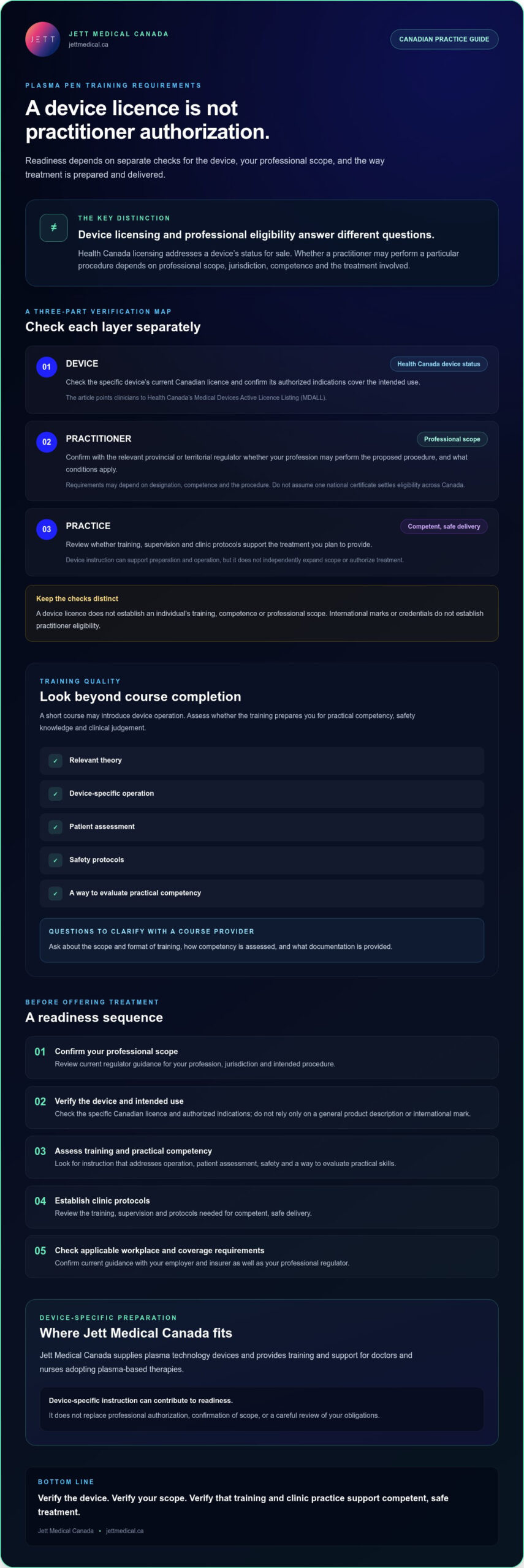
How Can You Assess Your Readiness Before Offering Plasma Pen Treatments?
A clinic isn’t ready to treat simply because it has purchased a licensed device. Readiness also depends on the practitioner’s verified authority, relevant competency, the device’s instructions and indications, and clinic systems that support safe care. Use this sequence to identify what’s confirmed and what still needs attention. Because requirements can vary, verify current guidance with your regulator, employer and insurer.
- 1. Verify scope: Check your professional regulator’s current guidance for the intended procedure, and clarify any conditions related to competence, supervision or setting.
- 2. Check device details: Confirm the exact model, current Health Canada licence status, authorized indications and manufacturer instructions. Compare them with the treatment you plan to offer.
- 3. Assess training: Review whether preparation covers the device and procedure, and whether practical competency is assessed or documented. Identify any gaps before treating patients.
- 4. Establish clinic protocols: Put patient assessment, consent, infection prevention, documentation, follow-up and escalation processes in place before launch.
What should a pre-launch clinic checklist document?
Keep a written record that names the responsible practitioner and captures their verified scope and training evidence. Include the device model, licence information, authorized indications and device-specific instructions. Document patient information and selection criteria, consent and record-keeping procedures, as well as protocols for infection prevention, adverse events, follow-up and referral when needed.
Confirm applicable requirements with the relevant regulator, employer and insurer rather than assuming a general checklist settles them. These checks can surface issues such as unclear supervision expectations, missing coverage confirmation or a mismatch between the planned use and device instructions.
How should a clinic close competency gaps?
Compare existing clinical experience with the specific tasks and decisions the procedure involves. A clinician may have experience with aesthetic care but still need additional preparation in device operation, patient selection or managing an adverse event. Don’t treat patients until relevant gaps have been addressed and readiness can be supported by appropriate training and practice processes.
Where indicated by the clinician or regulator, seek additional supervised or device-specific preparation. Jett Medical Canada provides device training and support for doctors and nurses adopting plasma-based therapies. Ask Jett Medical Canada about device-specific training and support as part of your readiness planning, while confirming professional authorization independently. Revisit the clinic’s assessment when device instructions, protocols or official guidance change.
How Can Jett Medical Canada Support Device-Specific Plasma Pen Preparation?
Device-specific instruction can help clinicians understand the operation and use of the equipment they’re considering. It is one part of clinical preparation, not a substitute for professional authorization, regulator guidance or clinic readiness. Jett Medical Canada supplies plasma technology devices to professional clinics and provides training and support for doctors and nurses adopting plasma-based therapies.
Before making a decision, ask focused questions about the device and the support associated with it. For example, clinicians considering the Jett Plasma Pen Medical or Jett Plasma Medical II should verify the current licence details and authorized indications for the exact model, then assess whether those align with the planned practice. Device names alone don’t establish that a particular procedure is appropriate or that an individual is eligible to perform it.
What should clinicians ask a device supplier before adopting a plasma pen?
Ask which device model, manufacturer instructions and indications apply to your intended use. Clarify the training’s scope and format, what device operation it addresses, whether practical assessment is included, and what documentation is provided. Ask what post-training assistance is available, including how to access operating guidance or resolve device-specific questions. Confirm any details that affect your decision before relying on them.
Then assess the answers against your own professional requirements. Confirm that the proposed procedure fits your scope, that current regulator guidance supports your practice, and that employer policies and clinic protocols are addressed. A supplier can provide device-specific preparation, but professional and clinical decisions remain subject to the requirements that apply to your role and setting.
What is the next step for a Canadian clinic?
Bring your questions together before discussing device suitability. A focused list can cover:
- Your designation, intended procedure and regulator’s current scope guidance.
- The exact device model, Canadian licence status, authorized indications and manufacturer instructions.
- Your training needs, competency evidence and any gaps that require further preparation.
- Clinic policies for patient assessment, consent, documentation and ongoing care.
For additional background on licensed technology, consult Medical Grade Plasma Pen Canada: The Professional’s Guide to Licensed Technology. The article can help frame device-related questions, but confirm current licence details and indications through official information before proceeding.
Jett Medical Canada can discuss device-specific training and support with qualified clinic professionals. Discuss plasma pen training and device suitability as a practical next step, while verifying your own authorization and readiness independently. A careful review of the plasma pen training requirements Canada clinicians need to consider helps keep device preparation aligned with professional and clinic responsibilities.
Build a Confident, Clinically Ready Plasma Practice
The key to meeting plasma pen training requirements Canada clinicians should consider is to treat readiness as more than device operation. First, verify your professional scope and the rules that apply in your jurisdiction. Then confirm the specific device’s licence and indications, assess whether training demonstrates practical competency, and establish clinic protocols for patient care and follow-up.
A course completion document or licensed device alone can’t confirm that a practitioner is authorized and ready to perform a procedure. Device-specific preparation is valuable when it fits your clinical role and helps address the needs of your practice.
Jett Medical Canada supplies plasma technology devices to professional clinics across Canada and provides training and support for doctors and nurses adopting plasma-based therapies. Qualified clinic professionals can discuss device-specific training and support with Jett Medical Canada as one part of their readiness planning. With careful verification and a clear plan for competency, your clinic can take its next steps with greater confidence.
Frequently Asked Questions
Is plasma pen training legally required in Canada?
There isn’t one answer that applies to every practitioner, procedure and jurisdiction. The plasma pen training requirements Canada clinicians need to verify include professional scope, competence, current regulator guidance and any applicable employer or insurer conditions. Health Canada device licensing addresses the device, not an individual’s authority to perform a treatment. Check the requirements that apply to your role and planned use before offering a procedure.
Who can use a plasma pen professionally in Canada?
Eligibility depends on the practitioner’s designation, scope of practice, competence, the specific procedure and applicable jurisdictional rules. A course certificate or access to a licensed device doesn’t establish eligibility on its own. Check your professional regulator’s current guidance, and confirm any additional employer, supervision or insurer requirements. Don’t assume that another profession’s or province’s approach applies to your practice.
Does Health Canada require a plasma pen training certificate?
Health Canada’s medical device licensing process concerns the device, not a national practitioner training certificate. Device licensing and an individual’s professional qualifications answer separate questions. A regulator, employer or insurer may have relevant requirements for a practitioner or procedure, so verify those directly. Also confirm the exact device’s current licence status and authorized indications using Health Canada’s Medical Devices Active Licence Listing.
What should plasma pen training cover?
Assess whether the course addresses clinical theory and practical readiness, not only device controls. Relevant topics include anatomy, patient selection, contraindications, informed consent, treatment planning, infection prevention, adverse-event recognition, escalation and aftercare. Check that instruction matches the specific device’s authorized indications and your professional scope. Ask how practical competency is assessed and documented, and what device instructions or follow-up support are available.
Can nurses perform plasma pen treatments in Canada?
Nurses shouldn’t assume they’re eligible based on their designation alone. Whether a nurse may perform a particular plasma pen procedure depends on current provincial or territorial regulator guidance, scope, competence and the intended treatment. Employer policies, supervision expectations and insurance terms may also be relevant. Nurses should confirm these details with their regulator and workplace before proceeding, rather than relying on course marketing or another clinician’s experience.
Does completing a plasma pen course qualify me to treat patients?
Not by itself. Course completion may document attendance or learning, but it doesn’t automatically authorize a practitioner to perform a procedure or establish that they can do so competently. Confirm that the treatment falls within your professional scope, and review how the course evaluates practical skills. Address any gaps through appropriate preparation and follow applicable regulator, employer and insurer requirements before treating patients.
How do I verify that a plasma pen device is appropriate for my clinic?
Identify the exact model and check its current Health Canada licence status and authorized indications in the Medical Devices Active Licence Listing. Compare those details with the intended procedure, operator and clinic setting. Review manufacturer instructions, then confirm professional scope and clinic policies with the relevant authorities. A licence doesn’t establish practitioner eligibility, so assess device suitability and clinical readiness as separate steps.