
A device marketed as a plasma pen isn’t automatically appropriate for clinical wrinkle care. Before adopting a professional plasma pen for wrinkle reduction, assess its intended use, Health Canada licensing, patient suitability and the practitioner’s scope and training. The technology matters, but so does the clinical framework around it.
When comparing professional devices with consumer-oriented pens, look for clear information about intended use, device documentation, realistic outcomes and treatment limitations. In Canada, device-specific licensing and provincial professional requirements are important considerations. A device licence alone doesn’t establish that every practitioner or indication is appropriate.
This guide covers practical factors for evaluating plasma technology, including patient assessment, protocols, safety and documentation. It also introduces Jett Medical Canada’s professional plasma devices, which use patented direct-current plasma technology, and the company’s training and support for medical professionals. The aim is to help clinics evaluate the technology carefully and avoid relying on broad marketing claims.
Key Takeaways
- Define wrinkle reduction as a treatment goal, not a guaranteed result. A proposed mechanism is not the same as evidence of clinical outcomes.
- Assess the intended indication, patient history, treatment area, expectations and limitations before considering a professional plasma pen for wrinkle reduction.
- Use a structured clinic-adoption framework to review evidence, device documentation, practitioner training, workflow and follow-up.
- A device name alone doesn’t establish suitability. Licensing, authorized use and practitioner scope each matter in Canadian practice.
- Explore Jett Plasma Pen Medical, Jett Plasma Lift Medical and Jett Plasma Medical II, which use Jett Medical Canada’s patented direct-current plasma technology.
Professional Plasma Pen for Wrinkle Reduction: Purpose
A professional plasma pen is a medical device used by clinicians to apply plasma energy to a selected treatment area. In aesthetic practice, wrinkle reduction may be a treatment goal, but it isn’t a guaranteed outcome or a universal indication. The device’s labelling, authorized use and supporting clinical evidence help determine which applications and claims are appropriate.
How clinicians frame plasma-based wrinkle-reduction treatment
Describe the aesthetic aim in measured terms, such as addressing the appearance of wrinkles, rather than promising a particular degree of change. A treatment plan depends on the patient’s needs, the area being considered and the specific device’s instructions and labelling. A technical description explains how a device is designed to operate; it doesn’t establish clinical effectiveness for wrinkle reduction on its own.
Electrosurgery offers useful background on how electrical energy can interact with biological tissue. The overview How Plasma Technology Works provides general context, but doesn’t establish the mechanism, indication or outcomes of a particular plasma device. Those require device-specific documentation and relevant evidence.
Professional devices and consumer pens are not interchangeable
Devices intended for professional clinical use may have distinct labelling, regulatory documentation, operating instructions and training or clinical support. Consumer-oriented pens can differ in intended use and documentation. Similar appearance or shared “plasma pen” terminology doesn’t show that devices are equivalent or that a consumer product is appropriate for clinic use.
In Canada, assess the exact device and its Health Canada licensing information, including the scope of the licence, alongside the practitioner’s professional scope and relevant training. A licence for a device doesn’t establish that every practitioner or proposed use is appropriate. For a closer look at licensed technology and professional-device considerations, see this professional plasma pen guide.
For clinics considering a professional plasma pen for wrinkle reduction, start with the intended clinical application, the evidence supporting that application and the documentation for the specific device. A marketing label or technical feature alone isn’t enough. This distinction supports responsible patient discussions and helps clinics evaluate safety and suitability.
How Plasma Technology Relates to Skin Tightening and Wrinkle Appearance
“Plasma” describes an electrically energized state of gas, but the term alone doesn’t explain how a particular device operates or what clinical results it can produce. Professional aesthetic devices use electrical energy at the treatment site. A device’s technical description can help clinicians understand its operation; it isn’t evidence by itself that wrinkles will improve or skin will tighten.
That distinction matters in patient discussions. Present improvement in wrinkle appearance as an intended treatment aim, not a guaranteed result. Visible change, if any, can vary with the individual, treatment area and device-specific application. Recovery can also differ. Avoid claims about biological effects or predictable outcomes unless evidence supports them for the specific device and use.
What direct-current plasma means in a professional device
Direct current (DC) flows in one direction, while alternating current (AC) periodically changes direction. Jett Medical Canada’s devices use patented direct-current plasma technology. That technical feature identifies the current type; it doesn’t establish that the devices are more effective or suitable for a particular wrinkle concern than another technology. A focused direct-current and AC plasma comparison can clarify terminology, but it cannot replace device-specific clinical evidence.
What clinicians should say about expected results
Start with the appearance the patient hopes to address, then explain what is known and what remains uncertain for the specific device, indication and treatment area. Don’t turn a mechanism or general device category into a promised degree of tightening. Patient assessment and treatment planning should reflect individual circumstances and the device’s labelling.
Regulatory context also needs careful wording. The U.S. FDA document for a particular device describes its cleared use and classification; it doesn’t establish Canadian authorization or support a wrinkle-reduction claim. Review the FDA Regulatory Status as a device-specific U.S. reference, not as evidence for every plasma pen or indication. Clinics can review Jett Medical Canada’s professional offerings and clinical support through Jett Medical Canada’s plasma technology.
Assessing Suitability, Safety, and Evidence Before Wrinkle Treatment
A device name alone doesn’t establish that a plasma device is suitable for a patient or effective for wrinkle reduction. Clinical decisions require a match between the patient’s goals, treatment area, device’s authorized use and evidence supporting the proposed claim. Patient selection and professional judgement remain central.
Patient selection and informed consent
Begin by documenting the patient’s concerns and expectations, relevant medical and skin history, and factors that may affect treatment risk or recovery. Assess the specific area and whether the intended use aligns with the device’s instructions. Use contraindications and precautions from device-specific clinical guidance rather than applying a universal checklist to every plasma pen.
Informed consent should explain the proposed treatment aim, alternatives, uncertainty about results, anticipated recovery and possible adverse effects. Keep the discussion proportionate to the evidence. If available information doesn’t establish a likely degree of wrinkle improvement for that device and indication, don’t present an estimate as a predictable outcome.
Evidence and Canadian regulatory documentation
Review evidence that matches the exact device, treatment indication and claim being considered. Findings about another device, use or treatment area may not support the same conclusion. The U.S. FDA’s warning on unapproved wrinkle-reduction claims illustrates why promotional language needs to be assessed against the specific regulatory status and evidence. It is a U.S. regulatory example, not a determination of Canadian authorization.
In Canada, check the exact device’s Health Canada licence and scope, including authorized indications, rather than relying on the general term “plasma pen.” A licence is device-specific. It doesn’t establish that every proposed wrinkle-treatment claim is authorized or that a particular practitioner is qualified to perform it. MDSAP refers to a medical-device audit program. It isn’t proof of clinical effectiveness or a substitute for Health Canada licensing information.
For a practical reference on Canadian device documentation, consult this Health Canada licensed plasma device guide. For clinics evaluating a professional plasma pen for wrinkle reduction, document the licence scope, relevant evidence, patient discussion and clinical rationale. These records help keep treatment planning grounded in the specific device and proposed use.
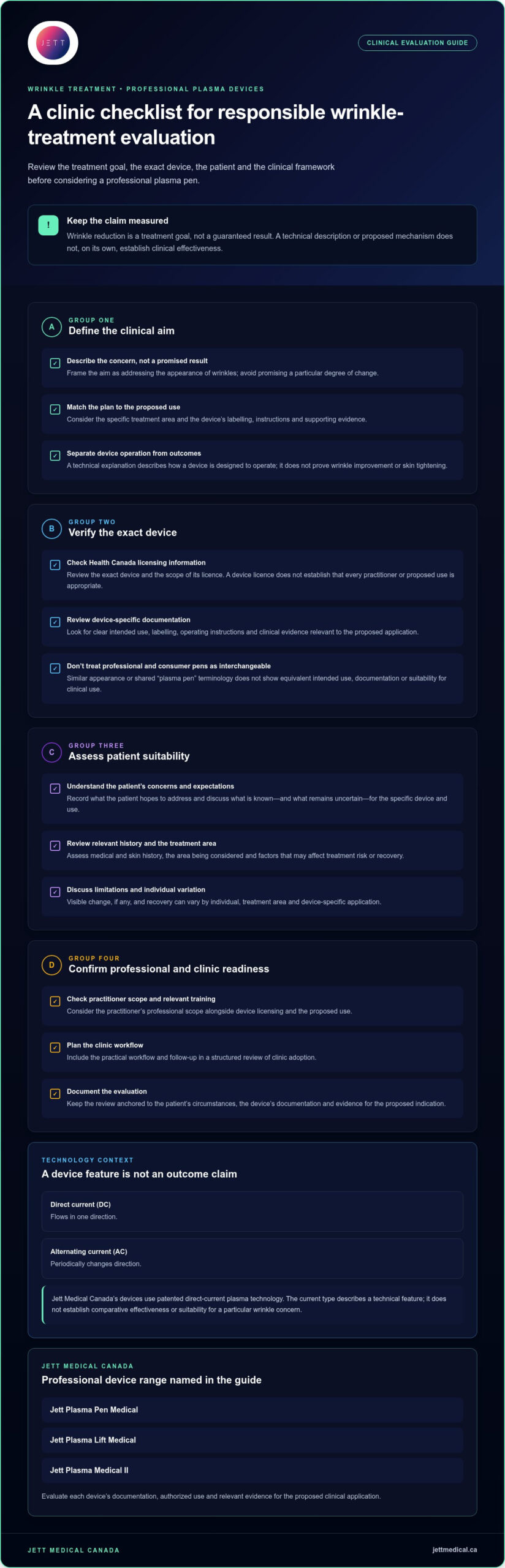
A Practical Clinic Framework for Evaluating Professional Plasma Pens
Adopting a device is a clinical and operational decision, not simply an equipment purchase. Use a structured review to determine whether its documented use, evidence and workflow align with your clinic’s goals. A professional plasma pen for wrinkle reduction shouldn’t be treated as suitable for every patient or practice by default.
- Define the intended indication. Specify the concern the clinic aims to address and the treatment area. Compare that plan with the specific device’s instructions and authorized use. Don’t assume a broad category description supports every wrinkle-related claim.
- Review the evidence. Look for evidence relevant to the exact device, indication and proposed treatment claim. Note limitations, including where findings may not apply to your patient group or planned use. This helps shape measured, accurate patient communication.
- Organize device documentation. Keep accessible records of the device identity, applicable Health Canada licence information, instructions for use and relevant maintenance or service documentation. Keep licence scope separate from claims about effectiveness.
- Prepare staff through training. Establish who is responsible for patient assessment, device operation, consent and follow-up before introducing a new workflow. Training should support competent use and reinforce the device’s instructions. Jett Medical Canada provides training and support for medical professionals adopting its plasma technology.
- Map the clinic workflow. Consider how assessment, scheduling, consent, treatment records and patient instructions fit into existing practice. Prepare staff to explain the treatment aim, uncertainty, possible adverse effects and expected recovery without promising a particular result.
- Plan documentation and follow-up. Record the clinical rationale, patient discussion, consent and relevant treatment details consistently. Set out how the clinic will provide post-treatment instructions and follow-up, and how questions or concerns will be documented and addressed.
This sequence can reveal practical gaps before a device enters routine use. A clinic may have device documentation but still need to clarify staff responsibilities, consent materials or follow-up processes. One device or workflow won’t necessarily suit every practice, patient or treatment area.
To explore Jett’s professional plasma device range and clinical adoption support, view Jett Medical Canada’s professional devices.
Jett Medical Canada’s Professional Plasma Technology for Clinical Practice
Jett Medical Canada supplies professional plasma devices to medical and aesthetic clinics across Canada. Its range includes Jett Plasma Pen Medical, Jett Plasma Lift Medical and Jett Plasma Medical II. These devices use patented direct-current plasma technology. The technology description doesn’t, on its own, establish a particular wrinkle-reduction outcome or authorized treatment indication.
Jett devices and professional support
Assess each device individually. Review its documentation, Health Canada licence scope and authorized use alongside evidence for the clinical application under consideration. Product names or shared technology don’t establish that devices have identical specifications, indications or supporting evidence. Don’t assume a device is appropriate for wrinkle treatment unless its documentation supports the proposed use.
Jett Medical Canada provides training and support for doctors and nurses adopting plasma-based therapies. Professional training can help clinicians understand device operation and incorporate relevant instructions into patient assessment, consent, records and follow-up. It supports staff readiness, but doesn’t replace professional judgement, scope-of-practice requirements or device-specific documentation.
Next steps for a clinic considering plasma technology
Connect the intended indication to the device’s authorized use and relevant evidence. Then assess training needs, staff competencies and clinic workflow, including how the team will communicate uncertainty, document consent and provide follow-up. These steps help determine whether a professional plasma pen for wrinkle reduction fits the clinic’s clinical framework without treating a technology description as a promise of results.
Jett Medical Canada’s professional range gives clinics a starting point for reviewing its direct-current plasma technology and adoption support. Explore Jett Medical Canada’s professional plasma technology as part of a device-specific assessment grounded in indication, evidence, licensing, training and workflow.
Make Your Next Clinical Evaluation Evidence-Led
Choosing a professional plasma pen for wrinkle reduction calls for more than assessing the device’s technology. Match the proposed indication to device-specific documentation and evidence, consider the patient’s goals and risks, and build training, consent, records and follow-up into the clinic workflow. A technical description or device licence alone doesn’t guarantee a particular aesthetic outcome.
Jett Medical Canada supplies professional plasma devices nationally and provides training and support for doctors and nurses. Its devices use patented direct-current plasma technology. Device-specific documentation remains essential when evaluating clinical application, licensing scope and evidence.
A measured, well-documented adoption process can support informed decisions and clear patient communication. With careful evaluation and a patient-centred approach, clinics can consider new technology with clinical responsibility.
Explore Jett Medical Canada’s professional plasma technology for your clinic’s device evaluation.
Frequently Asked Questions
Can a professional plasma pen reduce the appearance of wrinkles?
A professional plasma pen may be considered for an aesthetic goal such as improving the appearance of wrinkles, but results aren’t guaranteed. Evidence must support the specific device, indication and treatment claim. A device’s technical description or professional designation alone doesn’t establish effectiveness. Clinicians should review its labelling and relevant evidence, then explain the potential benefits and uncertainty in terms the patient can understand.
How does a plasma pen work for wrinkle reduction?
A plasma pen uses electrical energy to produce a plasma effect at a selected treatment site. The specific technology and intended use depend on the device. Jett Medical Canada’s devices use patented direct-current plasma technology, but that feature doesn’t prove a wrinkle-reduction outcome. For a professional plasma pen for wrinkle reduction, clinicians should distinguish how the device is designed to operate from evidence supporting its use for a particular indication.
Is a professional plasma pen different from a consumer plasma pen?
Yes. Devices can differ in intended use, regulatory documentation, instructions and professional training or support. The shared term “plasma pen” doesn’t mean two devices are interchangeable or equally appropriate for clinical use. Consumer-oriented products shouldn’t be assumed suitable for a clinic. Assess the exact device’s documentation and intended context, and ensure clinical use aligns with its authorized scope and the practitioner’s professional responsibilities.
Who may be suitable for professional plasma wrinkle treatment?
Suitability depends on the patient, treatment area, intended indication and specific device’s labelling. A clinician should assess the patient’s goals, relevant medical and skin history, individual risk factors and expectations before making a treatment decision. There isn’t a universal candidacy checklist for every device or patient. If the proposed use or likely benefit isn’t supported by available documentation and evidence, communicate that uncertainty clearly.
What should clinicians assess before adding a plasma pen to a clinic?
Assess the intended indication, device-specific evidence and documentation, Health Canada licence scope, staff training and clinic workflow. Plan how the team will discuss alternatives, uncertainty, recovery and possible adverse effects, and document assessment, consent and follow-up. Consider whether staff can follow the device instructions and manage the process consistently. A structured review helps identify gaps before adding a new technology to routine practice.
Are professional plasma devices licensed by Health Canada?
Some specific plasma devices are licensed by Health Canada for defined uses, including devices intended for professional use. Licensing isn’t a blanket authorization for every plasma pen, wrinkle-reduction claim or practitioner. Check the exact device in Health Canada’s Medical Devices Active Licence Listing and review its licence scope and authorized indications. Practitioners must also follow the requirements of their professional scope and applicable regulatory body.
What recovery should patients expect after plasma wrinkle treatment?
Recovery can vary with the individual, treatment area, specific device and procedure. Clinicians should use device-specific instructions to explain anticipated recovery and possible adverse effects without promising a fixed timeline. Patients should receive clear post-treatment guidance and know how to raise concerns with the treating clinic. Avoid generalizing recovery expectations from another device or indication, since those details may not apply to the treatment being considered.