
Choosing a plasma device based on global marketing rather than specific Canadian regulatory standing can jeopardize a medical practice’s legal and clinical integrity. When evaluating the plaxpot vs medical plasma pen, the distinction isn’t merely aesthetic; it’s a fundamental question of electrical engineering and patient safety. Many Canadian clinicians find themselves caught between the promise of versatile treatments and the fear of non-compliance with Health Canada’s rigorous medical device standards. You’re right to be concerned about how technical specifications like alternating current versus direct current impact patient downtime and procedural precision.
This article provides the clarity you need to make an evidence-based investment. We’ll examine the critical technical and regulatory differences between Plaxpot and medical-grade direct current plasma technology to ensure your clinic maintains absolute clinical precision and Health Canada compliance. By comparing the stability of patented DC discharge against standard AC units, you’ll gain a clear understanding of the technical specifications that define professional-grade hardware. We’ll also provide the evidence-based justification required to choose technology that meets Canadian safety standards, ensuring your practice remains at the intersection of innovation and regulatory excellence.
Key Takeaways
- Understand why patented Direct Current (DC) technology provides superior beam stability and smaller spot sizes compared to standard Alternating Current (AC) devices.
- Navigate the regulatory landscape of the plaxpot vs medical plasma pen by identifying which devices hold essential Health Canada Class 3 licensing for legal operation.
- Evaluate how precise energy control and specialized tip variety in medical-grade hardware like the Jett Plasma Pen Medical enhance treatment outcomes for delicate anatomical regions.
- Discover the expanded clinical utility of professional plasma technology, ranging from dermatological skin sublimation to advanced ophthalmic applications.
- Learn the importance of local clinical training and MDSAP-certified support structures in maintaining a safe, high-performance practice environment in Canada.
Understanding Plasma Technology: AC Discharge vs. DC Precision
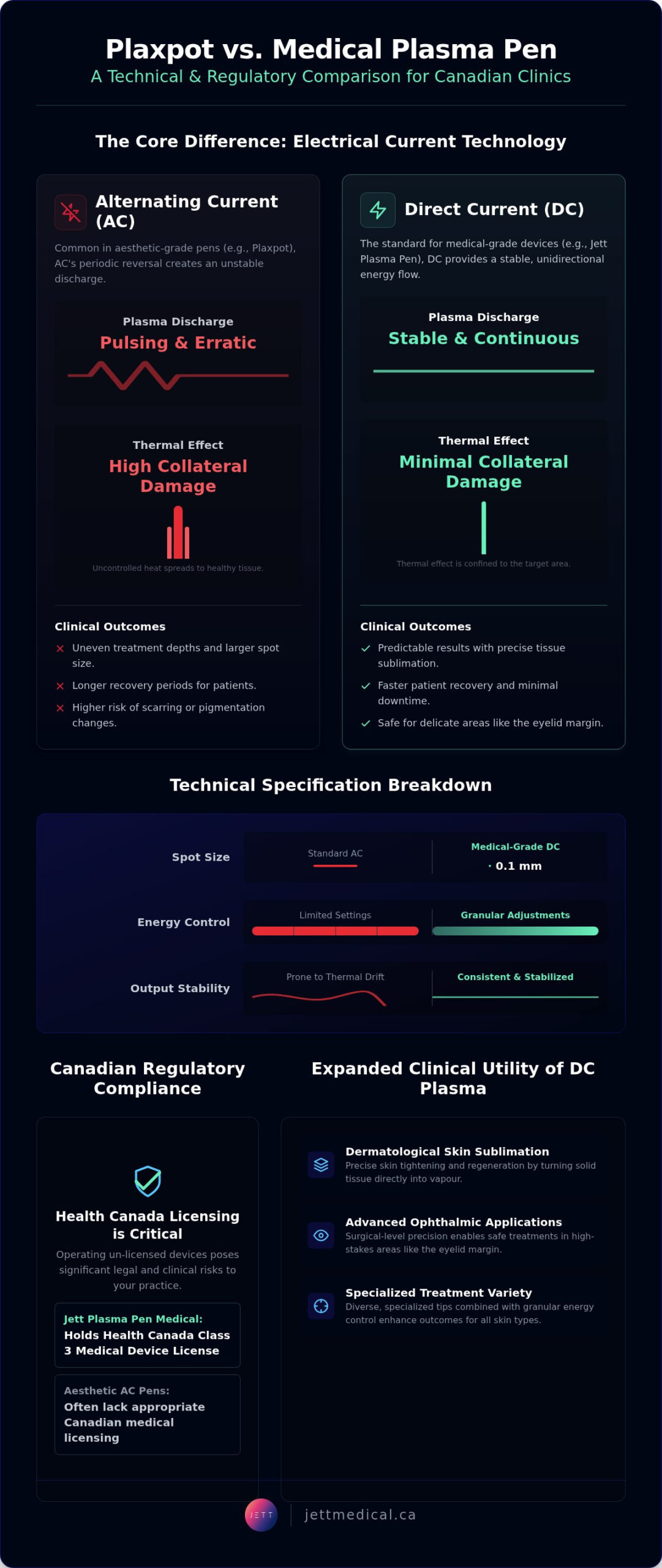
Plasma represents the fourth state of matter, an ionized gas that carries a significant electrical charge. Within the field of plasma medicine, this energy is harnessed to perform skin sublimation. Sublimation is the physical process of turning solid tissue directly into vapour without passing through a liquid state. This allows for precise tissue contraction and regeneration. However, the efficacy of this process depends entirely on the electrical current used to generate the plasma arc. When comparing the plaxpot vs medical plasma pen, the primary technical differentiator is the choice between Alternating Current (AC) and Direct Current (DC).
Alternating Current is the standard for most aesthetic-grade pens found on the market. By its nature, AC reverses direction periodically, which creates a pulsing or “sparking” discharge. This inconsistency makes it difficult for a clinician to maintain a steady distance from the skin, often resulting in uneven treatment depths. Direct Current, however, provides a unidirectional flow of electrons. This creates a stable, continuous plasma discharge that doesn’t fluctuate. For a Canadian medical practice, this stability isn’t just a preference; it’s a requirement for predictable clinical results and patient safety.
The Physics of the Plasma Arc
The physics behind a DC-based device, such as the Jett Plasma Pen Medical, allows for a constant stream of ions. Unlike AC devices that produce erratic sparks, a DC arc is narrow and coherent. This allows the practitioner to target specific cells with extreme accuracy. While many pens create a large, charred footprint on the skin, a medical-grade DC system maintains a much tighter focus. Direct Current plasma is a high-precision medical tool with a 0.1mm discharge diameter. This minute spot size enables treatments in high-stakes areas, such as the eyelid margin or near the tear duct, where a larger, unstable arc would be dangerous.
Thermal Damage and Healing Responses
Precision in plasma delivery directly correlates to how the body heals. Uncontrolled AC discharge typically leads to excessive lateral heat spread. This means the thermal energy bleeds into the surrounding healthy tissue, causing unnecessary trauma. This collateral damage often results in longer recovery periods and a higher risk of scarring or pigmentation changes. DC precision minimizes collateral tissue damage by ensuring the thermal effect is confined to the target area. By utilizing non-ablative plasma, clinicians can stimulate collagen production and fibroblast activity without the widespread inflammation associated with cheaper hardware. This refined approach leads to faster patient recovery and more consistent aesthetic improvements across all skin types.
Technical Specifications: Evaluating Plaxpot and Medical-Grade Jett Devices
The engineering of a plasma device dictates its clinical utility and the predictability of its results. When analyzing the plaxpot vs medical plasma pen, practitioners must look beyond aesthetic marketing to evaluate the underlying hardware architecture. Professional-grade devices prioritize granular energy control. While many aesthetic pens offer limited power settings, medical-grade systems allow for incremental adjustments. This specificity ensures that energy delivery is tailored to the thickness of the patient’s dermis and the sensitivity of the treatment area.
Clinicians operating in high-volume environments require hardware that maintains consistent output during back-to-back appointments. Entry-level devices often suffer from thermal drift. This means the intensity of the plasma arc can change as the device handpiece heats up over several hours of use. A medical-grade system uses advanced heat dissipation and stabilized circuitry to ensure the first treatment of the day is identical to the last. Ergonomics also play a vital role. A balanced, lightweight handpiece reduces practitioner fatigue, which is essential for maintaining the steady hand required for intricate procedures.
Spot Size and Treatment Depth
Precision is the primary requirement for periorbital work. The focal spot size of the Jett Plasma Pen Medical is significantly smaller than that of standard AC pens. A 0.1mm discharge diameter allows for the sublimation of tissue with minimal lateral heat spread. This prevents the prolonged erythema often seen with larger, less focused arcs. DC technology provides superior depth control, allowing the clinician to target the superficial epidermis without risking damage to the deeper papillary dermis. This level of control is difficult to achieve with the erratic sparking inherent in AC discharge.
Device Durability and Build Quality
Medical-grade hardware is constructed from biocompatible materials designed for rigorous clinical use. Unlike consumer-grade alternatives that often use plastic casings and non-removable tips, professional systems utilize medical-grade stainless steel and specialized alloys. These materials support stringent sterilization protocols, ensuring patient safety and device longevity. This distinction is critical given the current Health Canada advisory regarding unauthorized plasma devices that may pose health risks due to poor construction. Investing in durable, licensed hardware protects your practice from liability while providing a reliable return on investment. You can review our technical documentation to see how these build standards translate to clinical performance.
Health Canada Licensing and Regulatory Compliance for Canadian Clinics
Operating a clinical practice in Canada involves navigating a complex landscape of federal safety regulations. The debate over plaxpot vs medical plasma pen often overlooks a primary legal reality: Plaxpot is currently not authorized for sale or use in Canada. Health Canada classifies plasma pens as medical devices. This classification requires manufacturers to prove both safety and efficacy through clinical data before a license is granted. Using an unauthorized device exposes a practice to significant legal risks and potential equipment seizures.
Practitioners must prioritize devices that have successfully completed the federal review process. A Health Canada safety advisory on plasma pens highlights that unauthorized devices may pose health risks, including permanent scarring and skin discolouration. Licensed hardware, conversely, provides the assurance that the technology has been vetted for electrical safety and clinical precision. This regulatory alignment is the foundation of a professional medical environment.
Why Health Canada Approval is Mandatory
The rigorous testing required for Health Canada licensed plasma devices ensures that the hardware performs consistently under clinical conditions. For a medical practitioner, using non-licensed hardware is a breach of professional standards that can lead to the loss of your provincial license. Liability is another critical factor. Most professional insurance providers in Canada won’t cover complications arising from the use of unauthorized medical equipment. Maintaining compliance protects your professional standing and ensures that your clinic remains eligible for comprehensive insurance coverage.
MDSAP and International Certifications
The Medical Device Single Audit Program (MDSAP) represents the highest global standard for medical device manufacturing. This program allows a single regulatory audit to satisfy the requirements of multiple jurisdictions, including Canada, the United States, and Australia. Jett Medical Canada adheres to these stringent standards by distributing technology that is both MDSAP and CE certified. This level of oversight is rarely found in lower-tier aesthetic pens. While an aesthetic pen might claim international popularity, it lacks the verified quality management systems that define a true medical-grade instrument. Choosing MDSAP-certified hardware ensures that every component, from the internal circuitry to the treatment tips, meets a globally recognized benchmark for safety.
Clinical Applications: From Aesthetic Skin Tightening to Ophthalmic Precision
Professional plasma technology has evolved from a singular aesthetic tool into a versatile medical instrument capable of treating a wide array of conditions. While many entry-level devices are marketed solely for basic skin tightening, medical-grade hardware supports a significantly broader scope of practice. The choice in the plaxpot vs medical plasma pen debate often hinges on whether a clinician requires specialized ophthalmic or dermatological capabilities that unauthorized devices cannot safely provide. Utilizing a high-precision tool allows for the treatment of benign skin lesions, pigmentation, and various types of scarring with minimal risk to the patient.
The transition from general aesthetic use to advanced clinical application requires a device capable of extreme precision. Medical-grade DC technology allows for non-surgical blepharoplasty with significantly lower risks than AC-based alternatives. By delivering a stable, 0.1mm arc, practitioners can achieve meaningful tissue contraction on the upper and lower eyelids without the unpredictable heat spread that characterizes consumer-grade equipment. This level of control is essential for ensuring that the thermal effect remains confined to the epidermis and the superficial dermis, preventing deeper tissue trauma.
Ophthalmology and Dry Eye Disease
The integration of ophthalmic plasma technology for dry eye represents a significant advancement for Canadian eye care professionals. Specialized hardware like the Edge O Tech is specifically engineered to address conditions such as conjunctivochalasis and blepharitis. These procedures require the absolute stability of a Direct Current discharge to safely treat the ocular surface and eyelid margins. Plaxpot and other AC-driven devices are generally unsuitable for intra-orbital applications due to their erratic energy delivery and lack of specialized ophthalmic tips. Using a medical-grade DC pen ensures that thermal energy remains localized; this protects the delicate structures of the eye while effectively managing meibomian gland dysfunction and improving the tear film’s stability.
Dermatology and Aesthetic Medicine
In a dermatological setting, the Jett Plasma Lift Medical excels at deep wrinkle reduction and the removal of benign skin lesions. The device’s precision tips allow for the controlled management of xanthelasma, cherry angioma, and solar lentigines. Unlike traditional surgical methods, plasma sublimation minimizes the risk of post-inflammatory hyperpigmentation by avoiding excessive heat transfer to surrounding tissue. This is achieved through the targeted stimulation of fibroblasts within the dermis. This process triggers a long-term collagen remodelling response that continues for months after the initial treatment. By precisely vaporizing the superficial layer of the skin, the device initiates a natural healing cascade that replaces damaged tissue with organized, youthful fibres. If you’re ready to expand your clinic’s service offerings with licensed technology, view our full range of medical plasma devices.
Why Canadian Clinicians Prioritize Jett Plasma Technology
Selecting the right hardware is a foundational business decision that impacts patient outcomes and clinic liability. While the initial cost of unauthorized devices might seem attractive, the long-term ROI of medical-grade, licensed hardware is significantly higher. This value stems from reduced complication rates, higher patient satisfaction, and the security of operating within Canadian federal law. When clinicians evaluate the plaxpot vs medical plasma pen, they’re choosing between a temporary aesthetic tool and a permanent medical asset. Investing in patented DC technology ensures that your practice doesn’t just keep pace with industry trends but sets a benchmark for clinical excellence.
Comprehensive Training and Clinical Support
Success in plasma medicine isn’t solely dependent on the device; it requires a deep understanding of tissue interaction and energy delivery. Jett Medical Canada acts as more than a distributor; it serves as a dedicated clinical partner. This relationship is anchored by medical grade plasma training for Canadian nurses and physicians. This education ensures that practitioners don’t just own the technology but master the specific protocols required for safe, effective outcomes. Jett Medical Canada supports the implementation of these new protocols through ongoing clinical guidance, helping clinics integrate plasma treatments into their existing service menus seamlessly. In a field that evolves as quickly as plasma medicine, having access to continuous education and technical support is vital for maintaining a competitive edge and ensuring patient safety.
The Logical Conclusion for Professional Practices
The distinction between these devices is rooted in their engineering philosophy. The aesthetic-first approach of Plaxpot prioritizes accessibility over regulated precision. Jett Medical devices represent a medical-first engineering standard, making them the preferred professional plasma pen brands for Canada’s top dermatology and ophthalmology clinics. When finalizing a comparison of the plaxpot vs medical plasma pen, the evidence points toward the necessity of licensed, high-precision hardware. This commitment to DC stability and regulatory compliance ensures that your practice remains a leader in the intersection of technology and human health. Integrating this technology begins with a thorough assessment of your clinic’s needs and treatment goals. To explore how patented DC technology can elevate your clinical standards, contact our team for a professional consultation.
Advancing Your Practice with Licensed Plasma Innovation
The evaluation of the plaxpot vs medical plasma pen is a critical juncture for any Canadian practice focused on clinical integrity. Moving beyond basic skin tightening requires a transition to patented Direct Current technology, which provides the 0.1mm precision necessary for delicate periorbital and ophthalmic treatments. This technological shift, supported by Health Canada licensing and MDSAP certification, ensures that your clinic remains compliant with federal safety standards while delivering superior patient outcomes.
Choosing professional-grade hardware isn’t just about immediate results; it’s about the long-term stability and reputation of your practice. Jett Medical devices are currently trusted by Canadian ophthalmologists and dermatologists who demand rigorous testing and evidence-based performance. We encourage you to book a clinical demonstration of Jett Medical plasma technology today to see how this innovation integrates into your service menu. Elevating your standard of care is a rewarding journey that begins with the right technological foundation.
Frequently Asked Questions
Is the Plaxpot Health Canada licensed for medical use?
No, Plaxpot is not currently licensed by Health Canada for sale or use in Canada. Operating a device without a valid medical device license exposes a professional practice to legal liability and potential equipment seizure. Health Canada has issued specific safety warnings regarding unauthorized plasma pens, noting they may pose health risks such as permanent scarring or skin discolouration. Canadian clinicians should prioritize authorized hardware like the Jett Plasma Pen Medical to ensure full regulatory compliance.
What is the main difference between DC and AC plasma pens?
The fundamental difference lies in the electrical current’s stability and precision. Alternating Current (AC) devices produce an erratic, pulsing discharge that results in inconsistent tissue sublimation and higher lateral heat spread. Patented Direct Current (DC) technology, used in Jett Medical devices, creates a continuous, unidirectional flow. This allows for a stable 0.1mm discharge diameter, providing the precision required for delicate medical procedures and ensuring more predictable clinical outcomes for patients.
Can I use a medical plasma pen for dry eye disease treatments?
Yes, specialized medical plasma pens are effective for treating dry eye disease, specifically conditions like conjunctivochalasis and blepharitis. Hardware such as the Edge O Tech is engineered for these ophthalmic applications. By utilizing stable DC energy, clinicians can safely treat the ocular surface and eyelid margins to improve tear film stability. This specialized use case is a primary factor when comparing the plaxpot vs medical plasma pen for professional eye care clinics across Canada.
Does a professional plasma pen require specialized training for nurses in Canada?
Professional plasma devices require comprehensive clinical training to ensure patient safety and optimal results. Jett Medical Canada provides specialized education for Canadian nurses and doctors, covering advanced protocols and tissue interaction. This training is essential because medical-grade hardware offers higher power and precision than consumer units. Proper certification ensures that practitioners can confidently manage complex treatments, such as non-surgical blepharoplasty, while effectively minimizing the risk of complications or adverse events during the healing process.
How does the downtime of a medical-grade DC pen compare to an AC pen?
Medical-grade DC pens typically result in significantly less patient downtime compared to AC pens. Because the DC arc is more focused and stable, it minimizes collateral thermal damage to surrounding healthy tissue. AC devices often cause excessive inflammation and wider crusting due to their unstable, sparking discharge. By limiting the thermal effect to the target area, DC technology promotes a faster healing response and reduces the duration of post-procedural erythema and swelling for the patient.
What are the risks of using an unlicensed plasma pen in a Canadian clinic?
Using an unlicensed device in a Canadian clinic carries severe legal, professional, and health risks. Health Canada monitors the market for unauthorized medical devices and possesses the authority to seize equipment that doesn’t meet safety standards. Clinically, unlicensed pens often lack the precision of a medical-grade pen, leading to permanent scarring or hyperpigmentation. Professionally, using unauthorized hardware can invalidate your malpractice insurance and jeopardize your standing with provincial medical or nursing regulatory bodies.
Is the Jett Plasma Pen Medical suitable for all skin types?
The Jett Plasma Pen Medical is suitable for a wide range of skin types, though treatment protocols must be adjusted based on the patient’s Fitzpatrick scale rating. The precision of DC technology allows for lower energy settings that can safely treat darker skin tones with a reduced risk of post-inflammatory hyperpigmentation. Clinicians must receive proper training to identify the correct intensity and density of the plasma dots to ensure safe and effective outcomes for every patient they treat.
How do I choose between the Jett Plasma Lift and the Edge O Tech?
The choice depends on your clinical specialty and primary treatment goals. The Jett Plasma Lift Medical is optimized for dermatological and aesthetic applications, such as wrinkle reduction and lesion removal. Conversely, the Edge O Tech is a specialized ophthalmic device designed for treating dry eye disease and other ocular surface conditions. Both utilize patented DC technology, but their handpieces and tip varieties are engineered for the specific requirements of their respective medical fields when comparing the plaxpot vs medical plasma pen.