
For many Canadian clinicians, the decision between the Subnovii vs professional plasma pen often centres on brand recognition rather than the underlying physics of energy delivery. You likely recognize that while plasma technology offers transformative results for non-surgical blepharoplasty and skin tightening, the regulatory landscape in Canada has become increasingly rigorous. It’s often difficult to distinguish between marketing claims and the technical reality of AC versus DC waveforms when patient safety and Health Canada compliance are at stake.
This clinical analysis provides a technical comparison of energy stability, regulatory status, and procedural versatility to help you select a device that meets the highest medical standards. We will examine the specific advantages of direct current technology, verify the current licensing requirements within the Medical Devices Active Licence Listing (MDALL), and evaluate which systems offer the precision necessary for sensitive ophthalmic and aesthetic applications. By understanding these distinctions, you can ensure your practice remains both compliant and at the forefront of medical innovation.
Key Takeaways
- Understand the fundamental differences between alternating current and direct current waveforms to realize superior control during tissue sublimation.
- Compare the subnovii vs professional plasma pen to determine which technology provides the 0.1mm precision required for delicate medical procedures.
- Identify the clinical advantages of using patented direct current for specialized applications such as dry eye treatment and eyelid margin therapy.
- Learn how to navigate the Health Canada MDALL database to ensure your chosen device meets mandatory regulatory and safety standards.
- Evaluate the role of clinical training and technical support in maximizing the long-term efficacy of your medical-grade plasma technology.
Understanding Professional Plasma Technology in the Canadian Market
In the field of advanced aesthetics, plasma is defined as the fourth state of matter. It is created by ionizing atmospheric gases to generate an electrical arc that facilitates non-surgical tissue sublimation. Unlike traditional ablative lasers that remove entire layers of the epidermis, professional plasma technology converts solid skin tissue directly into gas. This process triggers a predictable healing response while minimizing the risk of thermal spread to surrounding healthy tissue. When analyzing the subnovii vs professional plasma pen, clinicians must first distinguish between these medical systems and the unregulated, consumer-grade “fibroblast” pens often found in non-clinical settings. Professional systems provide the voltage stability required to ensure patient safety in high-stakes areas like the periorbital region.
The scientific foundation of plasma medicine relies on the precision of this ionized energy. High-quality devices offer refined control over the electrical discharge, allowing practitioners to target specific anatomical depths. In Canada, the regulatory environment is strict; only devices with a valid Health Canada license are authorized for professional use. This ensures that the equipment has undergone rigorous testing for electrical safety and clinical efficacy. Beyond basic licensing, the distinction between technologies often lies in the waveform, specifically whether the device utilizes Alternating Current (AC) or Direct Current (DC) to deliver energy.
The Rise of Plasma in Canadian Medical Aesthetics
Canadian medical aesthetics has seen a significant shift from invasive surgical procedures toward precision-based energy devices. While ablative lasers were once the primary choice for skin resurfacing, they often required extensive downtime and carried risks for darker skin types. Plasma technology emerged as a versatile alternative, particularly for non-surgical blepharoplasty. The demand for “liquid eye lifts” has surged among Canadian patients seeking natural results without the scars associated with surgery. Utilizing a medical grade plasma pen Canada clinicians can now offer highly targeted treatments that were previously impossible with larger laser spot sizes.
Criteria for “Professional” Classification
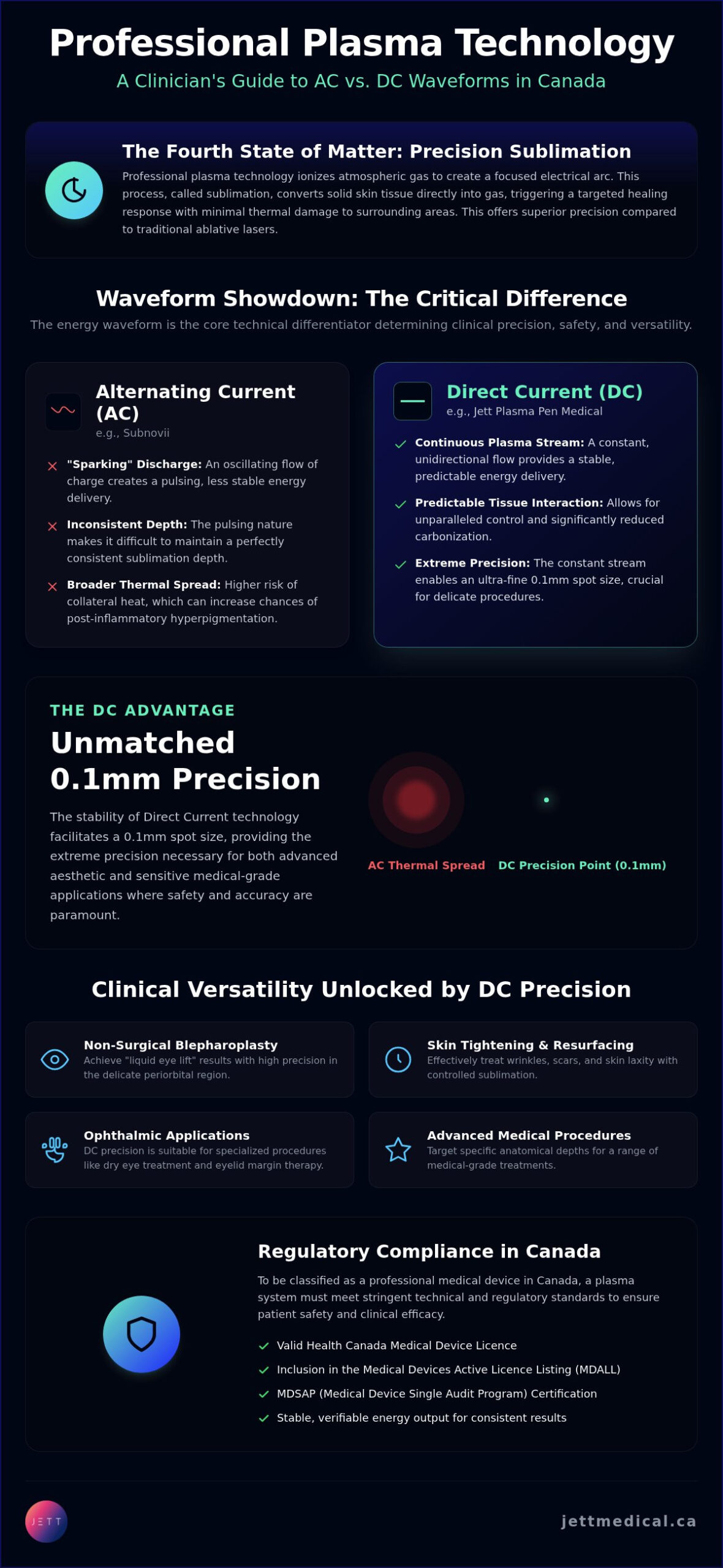
To be classified as a professional medical device, a plasma system must meet exacting technical and regulatory standards. Technical requirements include interchangeable treatment heads for varied clinical applications and a stable energy output that prevents fluctuating arc depths. Safety is validated through the Medical Device Single Audit Program (MDSAP), which ensures the manufacturer adheres to international quality management protocols. Professional plasma technology is a device that delivers controlled, ionized gas to sublimate tissue without collateral thermal damage. By choosing a system like the Jett Plasma Pen Medical, practitioners gain access to a 0.1mm spot size, providing the extreme precision necessary for both aesthetic and medical-grade applications.
Subnovii vs. Direct Current: A Technical Waveform Analysis
The core technical differentiator in the subnovii vs professional plasma pen debate is the electrical waveform used to generate the plasma arc. Subnovii operates on an Alternating Current (AC) mechanism; this involves a flow of charge that periodically reverses direction. In a clinical setting, this oscillation manifests as a “sparking” discharge. While AC systems are effective for general skin tightening, the pulsing nature of the energy makes it difficult to maintain a perfectly consistent depth of sublimation. This lack of continuity often leads to a broader thermal spread, which can increase the risk of post-inflammatory hyperpigmentation in sensitive Canadian patient populations.
Direct Current (DC) technology, as found in the Jett Plasma Pen Medical, offers a fundamentally different approach. DC provides a unidirectional, constant flow of ionized gas. This creates a stable, continuous plasma stream rather than a series of rapid sparks. For the clinician, this stability translates into predictable tissue interaction and significantly reduced carbonization. You can find a deeper dive into these physics in our analysis of Direct Current vs AC Plasma: Clinical Precision. Because the energy delivery is constant, the practitioner can move the device with greater confidence, knowing the thermal impact remains uniform across the entire treatment area.
The Physics of AC vs. DC Energy Delivery
The physics of energy delivery dictates the inflammatory response of the skin. AC waveforms, by their nature, generate more heat in the surrounding tissue because the “spark” is less focused. This collateral thermal damage is often the primary cause of prolonged downtime and edema. DC plasma minimizes this spread by concentrating the energy into a narrow, precise column. This efficiency allows for faster re-epithelialization and a safer profile for Fitzpatrick skin types IV and V. Given the concerns raised in the Health Canada safety alert regarding unregulated devices, choosing a stable DC waveform is a critical step in mitigating procedural risks. Canadian clinicians evaluating multiple AC-based systems should also review the plasma IQ vs DC plasma technical comparison to understand how these waveform differences affect clinical outcomes across leading device categories. For practices also assessing radiofrequency-driven platforms, the detailed breakdown of opus plasma vs direct current plasma provides essential context on how RF-based mechanisms differ from true DC energy delivery in terms of thermal spread and clinical precision.
Precision and Spot Size Comparison
Precision is perhaps the most visible difference when comparing the subnovii vs professional plasma pen. Subnovii’s low-frequency pulses, while advanced for an AC system, cannot match the concentrated focus of a DC stream. The Jett Plasma system achieves a consistent 0.1mm spot size, which is essential when working near the inner canthus or the delicate eyelid margin. DC plasma allows for a 0.1mm precision point, significantly reducing the risk of unintended scarring or excessive tissue trauma. If you are looking to expand your clinical capabilities into these high-precision zones, you might explore the technical specifications of DC-equipped devices to see how they integrate into your existing workflow.
Clinical Versatility: Aesthetics vs. Ophthalmic Applications
The clinical utility of a device defines its long-term value within a Canadian medical practice. While many systems focus exclusively on skin rejuvenation, the comparison between the subnovii vs professional plasma pen reveals a significant divide in procedural versatility. Subnovii is primarily marketed for its aesthetic capabilities. It focuses on wrinkle reduction and skin resurfacing. In contrast, medical-grade direct current (DC) technology, such as that found in the Jett Plasma Pen Medical, extends into specialized medical fields including dermatology and ophthalmology. This expanded scope allows clinicians to address a wider range of patient concerns beyond simple cosmetic improvements.
Expanding Beyond Aesthetics into Ophthalmology
One of the most significant advancements in the field is the development of ophthalmic plasma technology for dry eye. Specialized devices like the Edge O Tech utilize DC plasma to treat complex conditions such as conjunctivochalasis and blepharitis. These procedures require extreme precision to avoid damaging the ocular surface. This level of control is made possible by the stable 0.1mm spot size inherent to DC energy. Subnovii’s alternating current (AC) mechanism, while effective for broader aesthetic applications, doesn’t offer the specific control required for safe treatment of the eyelid margin. For a multidisciplinary clinic, the ability to transition from a cosmetic brow lift to a medical dry eye treatment provides a substantial clinical advantage.
Treating Complex Skin Conditions
Beyond periorbital treatments, the depth of tissue penetration and energy stability determine a device’s efficacy for treating complex skin conditions. Direct current plasma allows for the precise removal of xanthelasma, cherry angiomas, and verrucae with minimal risk of recurrence or scarring. This precision is particularly vital when treating patients with darker skin tones. Higher Fitzpatrick skin types require pigment-safe protocols to prevent post-inflammatory hyperpigmentation. Because DC plasma minimizes collateral thermal spread, it’s safer for a more diverse patient demographic than the more aggressive sparking typical of an AC system.
Implementing medical-grade protocols in a Canadian clinic requires equipment that can handle both high-volume aesthetic work and specialized medical procedures. When evaluating the subnovii vs professional plasma pen, practitioners should consider whether they require a tool for general aesthetics or a medical-grade instrument capable of addressing both cosmetic and pathological skin concerns. Selecting a device with the versatility of the Jett Plasma Medical II ensures that your practice isn’t limited by the technical constraints of the energy waveform. Clinicians who have also considered RF-based alternatives will find the comparison of opus plasma vs direct current plasma particularly useful when determining which energy modality best supports a multidisciplinary treatment menu.
Regulatory Compliance and Safety Standards in Canada
Operating a medical practice in Canada requires strict adherence to federal regulations overseen by Health Canada. While the subnovii vs professional plasma pen debate often focuses on clinical outcomes, the regulatory standing of a device is the most critical factor for risk management. In Canada, medical-grade plasma pens are classified as Class III medical devices. This designation requires manufacturers to provide extensive clinical data and undergo a rigorous review process before receiving a Medical Device Licence. Using unauthorized equipment can lead to severe legal consequences, including the seizure of devices and significant fines from federal authorities.
Liability remains a primary concern for medical directors and clinic owners. Most professional liability insurance policies in Canada specifically exclude coverage for procedures performed with unlicensed medical technology. If a patient experiences an adverse event such as scarring or hyperpigmentation, the use of a device lacking a Health Canada licence could void your malpractice protection. Selecting a device like the Jett Plasma Pen Medical ensures that your practice operates within the legal framework established for patient safety. Professional certification also mandates specific safety features, such as automatic shut-offs and precise voltage regulation, which prevent the accidental delivery of excessive energy to the dermis.
Health Canada Licensing vs. FDA Clearance
A common misconception in the Canadian market is that US FDA clearance automatically permits the sale and use of a device in Canada. This is incorrect. Canadian medical directors must verify the specific Health Canada active licence number via the Medical Devices Active Licence Listing (MDALL) database. The Jett Plasma Pen Medical achieved Canadian certification only after meeting these stringent national requirements, which differ significantly from American standards. This regulatory validation provides a layer of security for clinicians, ensuring the technology has been vetted for the specific needs of the Canadian healthcare environment. Maintaining this compliance is essential for protecting both the patient’s health and the clinic’s professional reputation.
MDSAP and International Quality Standards
The Medical Device Single Audit Program (MDSAP) represents the gold standard for quality management in the medical device industry. For Canadian distributors and practitioners, MDSAP approval signifies that a manufacturer has undergone a comprehensive audit that satisfies the requirements of multiple regulatory jurisdictions. MDSAP certification ensures the manufacturing process meets the highest global standards for medical aesthetic equipment. When combined with international certifications such as ISO 13485 and the CE mark, these standards guarantee device reliability and consistency. If you are evaluating new technology for your practice, you can verify our Health Canada compliance and technical specifications to ensure your investment meets all national safety mandates.
Selecting the Optimal Plasma Solution for Your Clinic
Choosing between the subnovii vs professional plasma pen requires a pragmatic evaluation of technical specifications, regulatory security, and long-term return on investment (ROI). While marketing narratives often emphasize the novelty of low-frequency alternating current, the clinical reality is that direct current (DC) provides a level of control that AC waveforms cannot replicate. For a Canadian clinic, the ability to perform high-precision procedures with a 0.1mm spot size translates into superior patient outcomes and reduced risk of complications. Investing in technology that bridges the gap between aesthetic rejuvenation and medical-grade pathology treatment ensures your practice remains versatile in an evolving market.
Before finalizing a purchase, clinicians should utilize a rigorous evaluation checklist to ensure the technology aligns with Canadian medical standards. This process should include:
- Verification of an active Health Canada Medical Device Licence via the MDALL database.
- Technical confirmation of the waveform (Direct Current vs. Alternating Current) and its impact on thermal spread.
- Assessment of the device’s spot size and its suitability for periorbital and ophthalmic applications.
- Evaluation of the manufacturer’s training protocols and local clinical support infrastructure.
- Analysis of procedural versatility, specifically the ability to treat both aesthetic and medical indications.
The Jett Medical Canada Advantage
The Jett Plasma Pen Medical stands as the premier choice for practitioners who prioritize scientific rigor and technical precision. By utilizing patented DC technology, this system maintains a constant energy flow that eliminates the unpredictable sparking associated with other devices. This stability is essential for those using a professional plasma lift device to achieve predictable tissue sublimation. Jett Medical Canada provides specialized support and comprehensive training for doctors and nurses, ensuring that every practitioner can safely master the 0.1mm precision required for delicate eyelid treatments. This commitment to education minimizes downtime and maximizes the safety profile of your clinic.
Final Verdict: Subnovii or Jett Plasma?
The final decision rests on the specific clinical goals of your practice. Subnovii may be suitable for clinics focused exclusively on general aesthetic skin resurfacing. However, for multidisciplinary practices that require medical-grade precision for dermatology and ophthalmology, Jett Plasma technology is the superior instrument. Direct current technology represents the future of professional plasma, offering a safer, more controlled, and more versatile solution for the modern clinician. To see these technical advantages in practice, you can contact Jett Medical Canada for a clinical consultation and device demonstration to determine which system best serves your patient demographic.
Advancing Clinical Standards with Precision Plasma
Selecting the right technology for your practice requires balancing clinical versatility with regulatory security. As we have examined in the comparison of the subnovii vs professional plasma pen, practitioners must prioritize energy stability to ensure predictable tissue sublimation and patient safety. Direct current technology provides the 0.1mm precision necessary for advanced ophthalmic and dermatological applications that alternating current systems often struggle to replicate. It’s not just about the results you see today; it’s about the long-term reliability and compliance of your equipment within the Canadian medical landscape.
We are committed to helping you integrate these advancements seamlessly into your workflow. Our devices are Health Canada licensed and MDSAP approved, ensuring they meet the highest global standards for manufacturing and efficacy. By choosing patented direct current technology, you gain the ability to treat sensitive areas like the eyelid margin with total confidence. We also provide specialized training for Canadian clinicians to ensure every procedure is performed with technical mastery.
Ready to elevate your practice? Request a Clinical Comparison and Consultation today to explore how our innovation can enhance your patient outcomes. We look forward to supporting your clinical excellence through evidence-based technology and dedicated local support.
Frequently Asked Questions
Is the Subnovii plasma pen licensed by Health Canada?
Clinicians must verify the current status of any device via the Health Canada Medical Devices Active Licence Listing (MDALL) database. While professional systems like the Jett Plasma Pen Medical hold active Class III licences, others may only have FDA clearance, which isn’t sufficient for legal sale or use in Canada. Operating an unlicensed device poses significant regulatory risks and may void your professional liability insurance.
What is the main difference between AC and DC plasma technology?
Alternating Current (AC) utilizes an oscillating flow of electricity that creates a pulsing, sparking discharge and broader thermal spread. By comparison, Direct Current (DC) technology provides a constant, unidirectional flow of ionized gas. This stability allows for a more focused energy column and predictable tissue sublimation. DC systems minimize collateral damage to healthy skin, which typically leads to faster healing compared to AC alternatives.
Can professional plasma pens be used by nurses in Canada?
Registered nurses and nurse practitioners in Canada can typically operate professional plasma pens, provided they work within their provincial scope of practice and under appropriate medical direction. Jett Medical Canada provides specialized training programs specifically designed for healthcare professionals to ensure procedural safety. It’s essential to consult your provincial regulatory college to confirm specific delegation requirements for energy-based medical devices in your jurisdiction.
Why is Direct Current (DC) plasma considered safer for eye treatments?
DC plasma is considered safer for periorbital and ophthalmic procedures because it maintains a stable, continuous energy arc without the erratic sparking found in AC devices. This stability allows the Jett Plasma Pen Medical to achieve a precise 0.1mm spot size. Such extreme focus is critical when treating the eyelid margin, as it prevents unintended thermal spread to the globe or delicate ocular structures during medical applications.
What is the typical downtime for a professional plasma treatment?
Patient downtime varies based on the intensity of the treatment and the technology used. Most patients experience localized edema and the formation of small carbon crusts that typically shed within five to seven days. Because DC technology reduces unnecessary thermal trauma to the dermis, the inflammatory phase is often more controlled than with traditional AC sparking. Patients should follow strict post-procedure protocols to ensure optimal healing.
How does the spot size of Jett Plasma compare to Subnovii?
When evaluating the subnovii vs professional plasma pen, the difference in spot size is a primary technical consideration. The Jett Plasma system offers a patented 0.1mm precision point, which is significantly smaller and more concentrated than typical AC-based arcs. This smaller diameter allows for higher energy density at the point of contact while sparing the surrounding tissue, enabling medical-grade applications that require surgical-level accuracy.
Are there specific insurance requirements for using plasma pens in a Canadian clinic?
Canadian insurance providers generally require that any energy-based device used in a clinical setting holds a valid Health Canada Medical Device Licence. To ensure coverage, clinicians should provide:
- The MDALL licence number for the specific device.
- Proof of manufacturer-certified training for all operators.
This documentation confirms that the device meets national safety standards and that the operator is qualified to perform the procedures.
What medical conditions can be treated with a professional plasma pen besides wrinkles?
Professional medical-grade systems are capable of treating a wide range of pathological conditions beyond aesthetic skin tightening. Specialized devices like the Edge O Tech are used for:
- Ophthalmic conditions including dry eye disease, blepharitis, and conjunctivochalasis.
- Dermatological removals such as xanthelasma, cherry angiomas, and verrucae.
The ability to switch between aesthetic and medical protocols makes these devices a versatile asset for multidisciplinary Canadian clinics.