
The legal operation of a professional fibroblast device in Canada is no longer a matter of preference but a strict requirement of federal law. You’ve likely seen the surge in demand for non-surgical tissue sublimation, yet the market remains saturated with unauthorized consumer-grade pens that pose significant liability risks. It’s understandable to feel cautious when navigating the Medical Devices Active Licence Listing (MDALL) or weighing the clinical merits of Direct Current against Alternating Current plasma.
This guide provides the technical clarity you need to invest in medical-grade hardware with absolute confidence. We’ll detail the Health Canada regulatory landscape, explain why patented DC plasma maintains a precise 0.1 mm pinpoint arc for superior results, and outline the essential certifications required for Canadian practitioners in 2026. By the end of this analysis, you’ll realize how to distinguish between transient trends and the gold standard of plasma technology while ensuring your clinic remains compliant with the latest MDSAP standards. This methodical approach ensures your investment translates into predictable, patient-centric outcomes and long-term clinical success.
Key Takeaways
- Differentiate between Direct Current (DC) and Alternating Current (AC) technologies to realize superior precision and reduced thermal spread for your patients.
- Navigate the complex regulatory landscape by learning how to verify a professional fibroblast device canada through the Health Canada MDALL database.
- Explore the multi-specialty versatility of medical-grade plasma, including its applications in ophthalmology for dry eye disease and advanced dermatological tissue remodelling.
- Secure your clinic’s legal standing by understanding the necessity of MDSAP quality certifications and the insurance implications of using unauthorized hardware.
- Identify the essential components of a successful implementation strategy, including the requirement for manufacturer-led training for regulated healthcare professionals.
Understanding the Professional Fibroblast Landscape in Canada
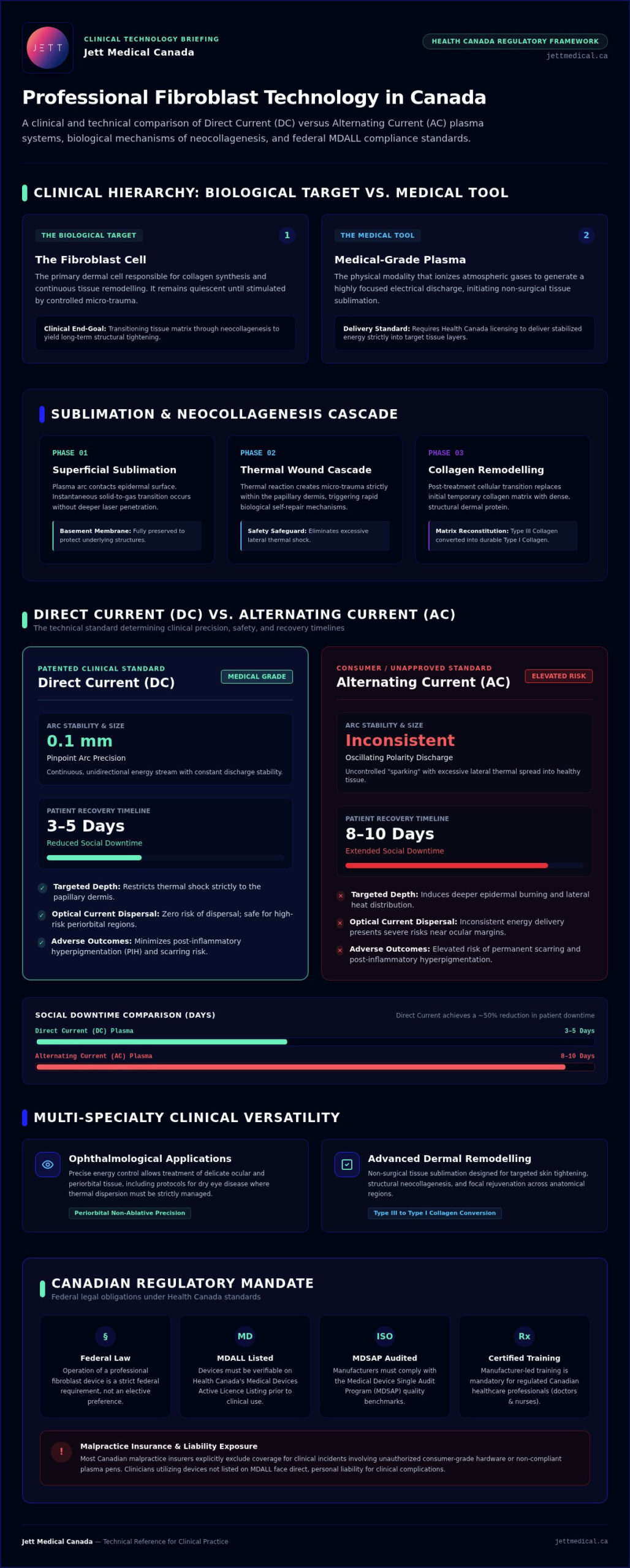
Professional fibroblast technology represents a sophisticated advancement in non-surgical aesthetics, utilizing plasma to ionize atmospheric gases and create a highly focused electrical discharge. Although the industry often uses “fibroblast” as a catch-all term, it is important to understand the hierarchy of the procedure. The fibroblast is the biological target. It is the specific cell responsible for collagen synthesis and tissue remodelling. Plasma is the medical tool used to activate these cells. A professional fibroblast device canada is a Health Canada licensed tool for non-surgical tissue sublimation. This distinction remains critical because the market currently contains numerous consumer-grade “plasma pens” that lack the energy stability and safety protocols required for clinical environments.
The Biological Mechanism of Fibroblast Stimulation
The efficacy of this technology relies on the creation of controlled micro-trauma within the dermis without damaging the surrounding tissue. When the plasma arc contacts the skin surface, it initiates a thermal reaction that triggers the wound-healing cascade. Unlike traditional lasers that may penetrate deeply, plasma sublimation stays superficial, protecting the basement membrane. This mechanism shares some foundations with the principles of radio-frequency electrosurgery, yet it is specifically calibrated for the delicate balance of tissue contraction and neocollagenesis. In the weeks following treatment, the skin undergoes a transition where Type III collagen is replaced by Type I collagen, resulting in long-term structural improvements and visible skin tightening.
Why Professional Grade Matters for Patient Safety
Patient safety in Canadian clinics is inextricably linked to the precision of energy delivery. Professional-grade devices offer a stable, unidirectional discharge that prevents the lateral thermal spread often seen in cheaper, unregulated alternatives. Without this control, patients face a heightened risk of post-inflammatory hyperpigmentation (PIH) or permanent scarring, especially on thinner skin areas like the periorbital region. Precision is the primary safeguard against adverse events.
Health Canada maintains strict regulatory oversight to protect both patients and practitioners. Utilizing a professional fibroblast device canada that is listed on the Medical Devices Active Licence Listing (MDALL) ensures compliance with federal safety standards and MDSAP quality audits. For doctors and nurses, the use of unlicensed hardware represents a significant professional liability. Most Canadian malpractice insurers will not cover incidents involving non-compliant medical equipment, leaving the practitioner personally responsible for clinical complications.
Direct Current vs. Alternating Current: The Technical Standard for Precision
The core differentiator among medical-grade systems lies in the electrical current utilized to generate the plasma arc. Most entry-level or unapproved devices rely on Alternating Current (AC), which oscillates polarities. This oscillation creates an inconsistent discharge often characterized by “sparking” and excessive lateral thermal spread. In contrast, a high-calibre professional fibroblast device canada utilizes Direct Current (DC). This unidirectional flow ensures a constant, stable energy stream that maintains a precise 0.1 mm pinpoint arc.
By restricting the thermal shock strictly to the papillary dermis, DC technology prevents the deeper epidermal burning associated with AC units. This precision is vital for minimizing post-inflammatory hyperpigmentation (PIH) and reducing social downtime to approximately 3–5 days, compared to the 8–10 days often required after AC-based procedures. Practitioners should consult the Health Canada advisory on unauthorized plasma pens to ensure their equipment meets these rigorous safety and performance standards.
Direct Current (DC): The Patented Advantage
DC technology allows for a more stable plasma arc than traditional AC units, which enables clinicians to perform non-ablative treatments even in high-risk zones like the periorbital area. Because the arc is so controlled, there is zero risk of optical current dispersal, making it a viable tool for ophthalmic indications. Specialized applicators allow the practitioner to toggle between shallow and deep wrinkle treatments by adjusting the intensity without losing arc stability. This versatility is essential for clinics looking to expand their service menu beyond basic skin tightening. You can explore the technical specifications of patented DC plasma technology to understand how it integrates into a modern medical practice.
Comparing Clinical Outcomes: Precision vs. Heat
A common misconception in medical aesthetics is that higher heat yields superior results. In reality, excessive heat often leads to carbonization and prolonged crusting rather than effective fibroblast stimulation. A high-precision professional fibroblast device canada focuses on sublimation, turning solids directly into gas, which triggers neocollagenesis through precision rather than bulk heating. This approach significantly improves patient comfort levels during the procedure. When the energy delivery is predictable, the clinical outcomes become reproducible, allowing for a higher standard of care and more reliable practice growth. Transitioning to a DC-based system ensures that the healing potential of the technology is maximized while the risks to the patient are minimized.
The utility of a professional fibroblast device canada extends far beyond superficial skin tightening. While initial adoption focused primarily on periorbital rejuvenation, the technology has evolved into a versatile medical tool for dermatology, ophthalmology, and gynaecology. This multi-specialty capability allows clinics to address complex pathologies like meibomian gland dysfunction, vascular lesions, and vulvovaginal health using a single, calibrated platform.
Advanced Dermatology and Aesthetic Medicine
Non-surgical blepharoplasty remains the flagship application for medical-grade plasma. It provides an effective alternative for patients seeking eyelid lifts without the risks of invasive surgery. Beyond wrinkles, practitioners use the professional plasma lift device to manage xanthelasma, fibromas, and acne scars through precision sublimation. This process removes benign lesions without surgical excision, which minimizes the risk of scarring and shortens recovery times. Vascular applications also benefit from this precision. The 0.1 mm arc allows for the targeted treatment of cherry angioma and telangiectasia with a plasma pen for cherry angioma with minimal collateral damage to the surrounding dermis. Clinicians seeking to expand their body contouring offerings should also consider how a professional plasma pen for stretch marks can address mature striae alba through the same high-precision DC sublimation principles.
Specialized Ophthalmic Plasma Applications
In the field of ophthalmology, the Edge O Tech has revolutionized the management of ocular surface diseases. It specifically treats meibomian gland dysfunction (MGD) by utilizing low-intensity DC fulguration to clear blockages and restore lipid layer stability. This technology also addresses conjunctivochalasis with non-surgical precision, offering a safer profile than traditional thermal cautery. Because DC plasma doesn’t disperse current through the globe, it’s uniquely suited for treatments on the ocular surface. Clinicians must ensure their hardware aligns with the Health Canada regulatory advisory on plasma pens to guarantee patient safety in these delicate zones.
Emerging Fields: Gynaecology and Beyond
Emerging research supports the use of plasma for vulvovaginal rejuvenation and the management of lichen sclerosus. These sensitive applications require the use of specialized applicators to control energy delivery. Silver applicators are typically used for larger surface areas and non-ablative stimulation. Golden applicators provide the intensity needed for targeted sublimation of tissue. This dual-applicator system ensures that a professional fibroblast device canada can be safely adapted for functional health treatments that were previously reliant on more aggressive surgical interventions. By offering these diverse protocols, a clinic can provide comprehensive care across multiple disciplines while maintaining a high standard of patient comfort.
Regulatory Requirements and Safety: Navigating Health Canada Standards
Health Canada classifies high-precision plasma systems as Class III medical devices, placing them under a rigorous regulatory framework. Operating a professional fibroblast device canada without a valid Medical Device Licence (MDL) is a federal violation that carries significant clinical and legal risks. Practitioners must ensure their hardware carries the necessary CE and ISO 13485 certifications to validate manufacturing quality and electrical safety. These standards are not mere suggestions; they are the foundation of a safe medical aesthetic practice that protects both the clinician and the patient from unpredictable outcomes.
The MDSAP Framework and Global Recognition
The Medical Device Single Audit Program (MDSAP) represents the highest tier of regulatory alignment for medical hardware. This program allows a single audit to satisfy the quality management requirements of multiple international jurisdictions, including Canada, the USA, and Australia. For a Canadian clinic, MDSAP approval signifies that the device has undergone the most stringent reviews available globally. This framework ensures that the manufacturer maintains consistent quality and provides the clinical data necessary to validate safety claims before the technology is ever deployed in a treatment room.
Verification Checklist for Clinic Owners
Clinic owners should never rely solely on marketing brochures when evaluating new technology. The first step in any procurement process is to verify the hardware on the Medical Devices Active Licence Listing (MDALL) database. This verification ensures you are investing in a genuine Health Canada licensed plasma device rather than an unauthorized import that may have been mislabelled during customs clearance. When searching the database, it is essential to confirm that the device matches its intended clinical use case and that the distributor is authorized to provide the required technical support and training.
Liability remains a primary concern for regulated healthcare professionals across Canada. Medical malpractice insurers typically exclude coverage for injuries or complications resulting from the use of devices not listed on MDALL. If a patient suffers a burn or permanent scarring from an unapproved pen, the practitioner faces personal liability and potential disciplinary action from their provincial regulatory body. Choosing a professional fibroblast device canada that meets all federal standards is the only way to safeguard your professional reputation and ensure patient-centric care. You can verify the compliance and certification status of our Health Canada approved plasma systems to ensure your clinic remains at the forefront of safety and innovation.
Implementing Medical-Grade Plasma Technology in Your Practice
The integration of a professional fibroblast device canada into an existing clinical menu requires a methodical approach to both technical acquisition and staff development. When evaluating the return on investment, clinic owners must consider that while treatment times for focal areas like the eyelids are relatively brief, the high-precision outcomes generate significant long-term value. Success depends on sourcing technology from a reputable medical grade plasma pen Canada distributor that provides more than just hardware. A reliable partner serves as a bridge between international innovation and local clinical excellence, ensuring that every procedure aligns with Canadian safety standards and MDSAP requirements.
Training and Certification for Doctors and Nurses
The transition from traditional energy-based devices to DC plasma necessitates specialized manufacturer-led training. Unlike generic aesthetic courses, training provided by professional plasma pen brands focuses on the nuances of Direct Current precision. Clinicians must realize the difference between ablative sublimation and non-ablative stimulation to tailor protocols for diverse patient needs. Hands-on workshops allow nurses and doctors to master the 0.1 mm arc, building the confidence required to treat delicate periorbital and ophthalmic zones safely. This educational foundation is the primary safeguard against the inconsistent results often associated with insufficient technical knowledge. Practitioners looking to broaden their treatment portfolio will find that the same DC precision principles apply when deploying a professional plasma pen for stretch marks, where controlled dermal contraction is essential for achieving predictable outcomes on body areas.
Post-Treatment Care and Patient Management
Optimizing the healing process is as critical as the procedure itself. Clinicians should implement standardized topical protocols to manage the carbon crusting that occurs during the initial 3–5 days of recovery. Managing patient expectations regarding this social downtime is essential for maintaining high satisfaction scores. It’s vital to communicate the gradual transition from Type III to Type I collagen so patients understand that while initial tightening is visible, the most significant structural improvements materialize over several months. Systematic follow-up care allows the practitioner to monitor the neocollagenesis process and document the long-term efficacy of the intervention.
For practitioners seeking maximum versatility across dermatology, ophthalmology, and gynaecology, the Jett Plasma Pen Medical remains the recommended starting point for a professional fibroblast device canada. Its patented DC technology and multi-specialty applicators provide the reliability needed to scale a practice while ensuring patient safety. By prioritizing Health Canada licensed technology and rigorous clinical training, Canadian clinics can deliver sophisticated, patient-centric results that reflect the highest standards of modern medical aesthetics.
Advancing Your Clinical Standards with Medical-Grade Plasma
Adopting a professional fibroblast device canada requires a commitment to both regulatory compliance and technical precision. The distinction between Alternating Current and Direct Current technology remains fundamental to patient safety and predictable outcomes. By prioritizing Health Canada licensed and MDSAP approved hardware, you protect your practice from professional liability while offering sophisticated results that extend across dermatology, ophthalmology, and gynaecology. This methodical approach ensures your clinic remains at the forefront of non-surgical tissue sublimation.
Our systems utilize patented Direct Current technology and are supported by comprehensive training for Canadian medical professionals to ensure clinical success. To see how these advancements can enhance your service menu and patient satisfaction, request a clinical consultation for Jett Medical plasma technology. We’re dedicated to helping you bridge the gap between global innovation and local clinical excellence. Your journey toward superior tissue remodelling and advanced patient-centric care starts with the right technological foundation. We look forward to supporting the growth and sophistication of your medical practice.
Frequently Asked Questions
Is a fibroblast device the same as a plasma pen?
A fibroblast device and a plasma pen are often used as interchangeable terms, but they represent different aspects of the procedure. The “fibroblast” is the target cell responsible for collagen production, while the “plasma pen” is the instrument used to deliver the energy. In a clinical context, a professional fibroblast device canada’s classified as a medical instrument that utilizes ionized gas to perform tissue sublimation. This distinguishes it from unregulated pens.
Are fibroblast treatments legal for nurses to perform in Canada?
Registered Nurses (RNs) and Nurse Practitioners (NPs) can legally perform these treatments in Canada provided they operate within their provincial scope of practice and follow manufacturer protocols. These procedures are typically governed by medical directives in aesthetic clinics. It’s essential that the practitioner uses a Health Canada licensed device, as using unauthorized equipment can lead to professional liability and the voiding of malpractice insurance coverage for the individual nurse.
What is the difference between Health Canada licensed and FDA approved?
Health Canada licensing and FDA approval are distinct regulatory processes for different jurisdictions. While a device might hold FDA clearance for use in the United States, it can’t be legally sold, advertised, or operated in Canada without a Health Canada Medical Device Licence (MDL). Canadian regulations require manufacturers to meet specific safety and quality standards, such as the Medical Device Single Audit Program (MDSAP), to ensure the hardware’s safe for clinical use.
How many treatments are typically required for professional fibroblast results?
The number of sessions required depends on the specific clinical indication and the patient’s physiological response. For dermatological concerns such as eyelid laxity or deep wrinkles, patients typically achieve optimal results within one to three sessions. In contrast, ophthalmic protocols for conditions like meibomian gland dysfunction often require a structured course of four therapeutic treatments. Each session’s spaced several weeks apart to allow the wound-healing cascade and neocollagenesis process to complete fully.
Can professional fibroblast devices be used on all skin types (Fitzpatrick scale)?
Professional plasma technology requires careful application across the Fitzpatrick scale. While lighter skin types carry a lower risk of complications, darker skin types are more susceptible to post-inflammatory hyperpigmentation. Utilizing a professional fibroblast device canada with patented Direct Current technology reduces this risk by providing a more stable arc. It’s vital that clinicians perform a thorough assessment and use non-ablative settings to ensure patient safety, as the technology doesn’t behave identically on all tissue types.
What is the typical downtime for a medical-grade plasma treatment?
Social downtime for a medical-grade treatment typically ranges from three to five days when using advanced Direct Current systems. During this period, small carbon crusts form at the treatment site and naturally shed as the underlying tissue heals. This recovery window’s significantly shorter than the eight to ten days often associated with older Alternating Current units. Patients can usually return to their regular activities once the crusting’s resolved and the new skin appears slightly pink.
Why should I choose Direct Current (DC) over Alternating Current (AC)?
Choosing Direct Current (DC) plasma technology provides a significant advantage in clinical precision and patient comfort. DC systems maintain a unidirectional flow that creates a constant 0.1 mm pinpoint arc, which minimizes lateral thermal damage to the surrounding dermis. This stability prevents the “sparking” and inconsistent energy delivery common in AC devices. Consequently, patients don’t experience the same level of inflammation or the increased risk of scarring that’s often found with less stable alternating current units.
How do I verify if a device is Health Canada licensed?
To verify the legal status of a device, you must search the Medical Devices Active Licence Listing (MDALL) database provided by Health Canada. You can search by the device name, manufacturer, or the specific licence number. It’s critical to confirm that the hardware’s listed as an active Class III medical device. If a device doesn’t appear in this database, it’s not authorized for commercial use or sale within the Canadian medical market.