
In 2026, the most resilient medical practices aren’t those with the most expensive laser suites, but those that prioritize low-overhead, multi-specialty technology. You’ve likely felt the mounting pressure of rising overhead costs and the diminishing returns of aesthetic devices that require expensive single-use consumables. Maintaining a competitive edge also means managing the regulatory anxiety associated with non-licensed equipment in a strictly monitored Canadian market. We understand that every capital investment must justify its place on your balance sheet through clinical versatility and patient safety.
This analysis demonstrates how optimizing plasma pen ROI for medical clinics involves more than just skin rejuvenation; it requires a strategic shift toward versatile, Health Canada licensed platforms like the Jett Plasma Medical series. You’ll discover how integrating medical-grade plasma technology can diversify your clinical revenue streams and optimize operational efficiency. We’ll examine how patented Direct Current technology reduces patient downtime while opening new revenue streams in specialized fields like dry eye therapy and gynaecology. By focusing on evidence-based outcomes and rigorous MDSAP standards, your practice can achieve sustainable growth through 2026 and beyond.
Key Takeaways
- Analyze the 2026 market shift toward non-surgical interventions and the increasing patient demand for natural aesthetic results with minimal downtime.
- Evaluate the financial advantages of Direct Current (DC) technology, which offers superior spot-size precision and faster healing compared to traditional alternating current devices.
- Learn how to optimize plasma pen ROI for medical clinics by minimizing consumable costs and utilizing a single platform across multiple clinical indications.
- Explore new revenue streams in specialized fields such as Ophthalmology, specifically focusing on high-demand treatments for dry eye disease and meibomian gland dysfunction.
- Understand the necessity of Health Canada licensed and MDSAP-approved equipment to ensure regulatory compliance and protect your long-term capital investment.
The Evolution of Plasma Technology for Medical Clinics in 2026
The Canadian aesthetic market has undergone a fundamental transformation. By 2026, the preference for non-surgical interventions has matured from a niche alternative into a clinical standard. Patients now prioritize “natural” results that preserve their unique facial architecture while demanding minimal recovery periods. This cultural shift has directly impacted the plasma technology for medical clinics, positioning it as a primary replacement for more invasive blepharoplasties or surgical skin tightening. We’re seeing the rise of “functional aesthetics,” where skin health and medical necessity converge. Clinicians aren’t just treating wrinkles; they’re addressing physiological concerns like skin laxity and tissue degeneration with surgical-grade precision. This holistic approach ensures that aesthetic improvements are supported by underlying structural health, moving toward longevity in care rather than temporary cosmetic fixes.
The Rise of Non-Surgical Precision
Fibroblast technology has reached a point of peak clinical maturity. While early iterations of plasma devices were often inconsistent, modern platforms like the Jett Plasma Medical II provide the controlled energy delivery required for predictable outcomes. Many practices are intentionally moving away from traditional laser platforms that carry high consumable costs and significant maintenance requirements. Instead, they’re adopting versatile plasma devices that offer a better plasma pen ROI for medical clinics due to lower overhead and broader application. International certifications, such as MDSAP and Health Canada licensing, have become essential benchmarks. These standards don’t just ensure safety; they build the professional trust necessary to maintain a high-volume practice in a competitive environment. Precise energy control allows for treating delicate areas, such as the periocular region, which were previously considered high-risk for non-surgical devices.
Patient Demographics and Market Demand
The patient profile is expanding. We’re no longer seeing just the 50+ demographic; younger patients are seeking preventative “pre-juvenation” treatments. The “lunchtime procedure” isn’t a marketing buzzword anymore; it’s a scheduling reality. Patients expect to return to their professional lives with minimal swelling or visible trauma. This demand has fueled an increased awareness of the medical grade plasma pen Canada provides. Informed patients now research the specific technology used in their treatments. They look for the stability and precision that only professional-grade Direct Current (DC) systems can offer. Maximizing plasma pen ROI for medical clinics requires a focus on devices that offer this multi-specialty utility. Clinics that can demonstrate their commitment to these high-precision standards will capture a larger share of this growing market. This trend is particularly evident in urban centres where patient education regarding Health Canada compliance is significantly higher.
Direct Current (DC) vs. AC Plasma: Clinical Precision as a Financial Driver
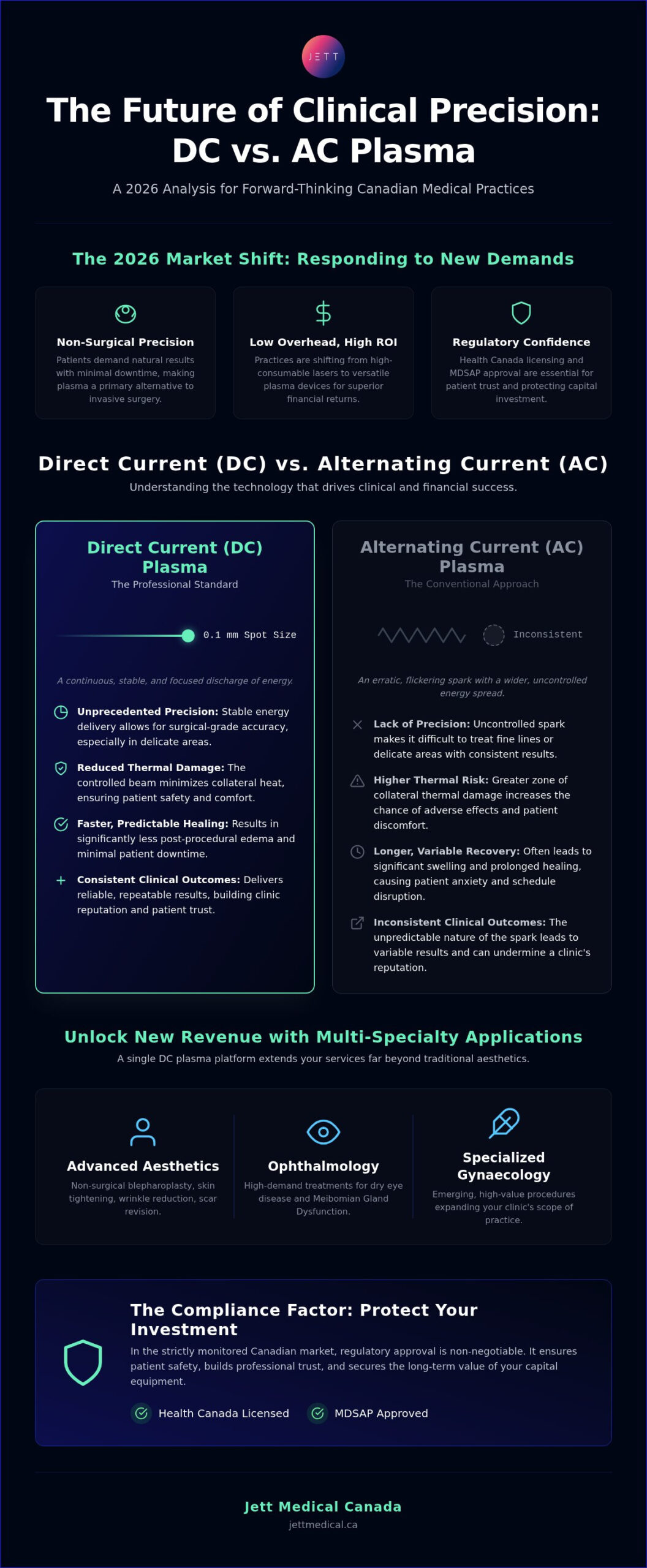
Direct Current (DC) technology represents the pinnacle of energy delivery in aesthetic medicine. Unlike Alternating Current (AC) plasma, which produces an erratic, flickering spark, DC technology generates a continuous and stable discharge. This stability is the primary catalyst for a superior plasma pen ROI for medical clinics, as it allows practitioners to work with unprecedented precision. When energy is delivered in a controlled manner, the zone of collateral thermal damage is significantly reduced. This results in faster re-epithelialization and a marked decrease in post-procedural edema. For a busy clinic, this translates to predictable healing timelines and a reduction in the recovery anxiety that often prevents patients from booking more complex treatments.
Technological Superiority and Patient Throughput
The technical distinction between these energy sources is profound. DC plasma is a steady stream of ionized gas that allows for micron-scale accuracy. By contrast, AC plasma devices often struggle with jumping sparks that can cause unintended damage to surrounding tissue. From a business perspective, fewer complications mean fewer unpaid follow-up appointments and a more streamlined patient journey. High patient throughput is only achievable when results are consistent and adverse events are minimized. By utilizing a device like the Jett Plasma Medical II, clinicians can confidently treat sensitive areas, such as the periocular region, where the margin for error is non-existent. This safety profile encourages organic patient referrals, which remains the most cost-effective way to grow a private practice. For nurse-led clinics looking to integrate this technology safely, our 2026 Canadian guide for plasma pen for aesthetic nurses provides a comprehensive clinical framework for achieving predictable outcomes.
The Reliability of MDSAP and Health Canada Approval
Investing in medical technology requires a focus on long-term viability and regulatory security. Adhering to Health Canada requirements for medical plasma pens is not merely a legal obligation; it’s a strategy to protect your clinic’s capital investment. Non-licensed aesthetic pens lack the rigorous testing and manufacturing standards required for medical applications, exposing clinics to significant legal liability and potential device seizures. Jett Medical maintains a commitment to international standards, including CE and MDSAP certifications, ensuring that every device meets global benchmarks for safety and efficacy. Choosing a licensed platform provides the clinical authority needed to command premium pricing. You can explore our range of Health Canada licensed plasma devices to see how these standards translate into practice stability.
Calculating the Real ROI: Revenue Streams and Operational Efficiency
Calculating the real plasma pen ROI for medical clinics requires an objective assessment of both direct revenue and hidden operational savings. Traditional light-based platforms often carry significant recurring costs, including mandatory service contracts and expensive handpiece replacements. Plasma technology, however, utilizes low-cost, sterile tips that represent a fraction of the treatment’s clinical value. This disparity allows for a rapid amortization of the initial capital expenditure. Because the device is portable and requires no specialized electrical infrastructure or cooling systems, it doesn’t tether a treatment room to a single modality. This spatial flexibility ensures that clinic square footage remains productive throughout the day, allowing for a more agile response to patient scheduling needs.
The time-to-ROI for plasma technology is notably shorter than that of large-scale laser systems. While a laser might take years to reach a break-even point due to high maintenance and consumable requirements, a medical-grade plasma device can achieve profitability much sooner. This is particularly relevant in the Canadian market, where private practices must balance rising overhead with the need for technological advancement. By reducing the financial barrier to entry for high-demand procedures, clinics can maintain a healthier cash flow while expanding their clinical capabilities and providing sophisticated care without the burden of excessive debt.
Diversified Treatment Portfolios
A primary driver of profitability is the ability to address diverse patient needs with a single investment. High-margin procedures that were previously the domain of plastic surgeons are now accessible to medical aesthetic clinics through plasma technology. Key revenue-generating treatments include:
- Non-surgical blepharoplasty for eyelid tightening.
- Precise xanthelasma removal.
- Targeted scar revision and stretch mark reduction.
- Benign lesion removal with minimal scarring.
Integrating these specialized procedures increases the average basket value of a patient visit. Instead of a single-modality appointment, clinicians can offer comprehensive rejuvenation protocols. Bundling plasma treatments with existing services, such as chemical peels or injectables, creates a synergistic effect that enhances clinical results while maximizing the revenue generated per hour of room time.
Operational Overhead and Staff Training
Efficiency is largely determined by how seamlessly a new technology integrates into daily practice. Finding a high-quality medical plasma device for sale is the first step, but long-term success depends on workflow optimization. These devices are particularly well-suited for nurse-led clinics, as the learning curve is manageable for experienced medical professionals. For nursing staff seeking structured clinical education on this modality, the evidence-based protocols outlined in our guide to plasma pen for aesthetic nurses can significantly reduce onboarding time and improve procedural confidence. Proper clinical training reduces the duration of each procedure without compromising safety, which directly optimizes room utilization rates. Choosing a distributor that provides ongoing clinical support and technical training ensures that your staff remains proficient and confident. This partnership approach minimizes downtime and ensures that the plasma pen ROI for medical clinics remains consistently high as the practice scales its offerings.
Diversifying Clinical Applications: Beyond Aesthetic Skin Tightening
While skin rejuvenation remains a cornerstone of the industry, the true potential for plasma pen ROI for medical clinics in 2026 lies in specialized therapeutic applications. Moving into functional medicine allows a practice to transition from discretionary aesthetic spending to essential healthcare services. This strategic shift is particularly evident in the integration of plasma within ophthalmology and medical dermatology. By addressing chronic conditions, clinics can establish recurring revenue models that are less susceptible to economic fluctuations. This diversification doesn’t just increase the volume of patients; it enhances the clinic’s reputation as a multi-specialty centre of excellence.
The Ophthalmic Opportunity
Dry Eye Disease (DED) is a significant health concern in Canada, affecting millions of patients who often find little relief from traditional drops or thermal masks. The lack of effective, non-invasive interventions has created a high-demand market for ophthalmic plasma technology for dry eye. Using specialized platforms like the Edge O Tech, practitioners can treat blepharitis and meibomian gland dysfunction (MGD) with microscopic precision. This technology facilitates the expression of meibomian glands and the removal of biofilm from the eyelid margin, providing immediate symptomatic relief. Because DED is a chronic condition, these procedures create a loyal patient demographic that returns for maintenance, ensuring a steady stream of clinical revenue. It’s a clear example of how specialized medical utility drives long-term practice stability.
Dermatology and Complex Skin Conditions
In the dermatological field, the requirement for surgical-level precision makes a professional plasma lift device the preferred choice for treating complex lesions. While earlier sections touched on aesthetic benefits, the technology is equally effective for pigmentation issues, cherry angiomas, and benign mole removal. The ability to treat trauma and surgical scars in a medical setting further expands the clinic’s utility. These applications require the micron-scale accuracy of Direct Current technology to avoid scarring in highly visible areas. By offering these specialized services, your practice can differentiate itself from standard aesthetic med-spas, capturing a market segment that values clinical expertise over cosmetic novelty. This clinical breadth ensures that your equipment remains a productive asset across various patient indications.
If you’re ready to expand your clinic’s therapeutic range and improve your bottom line, contact Jett Medical Canada to discuss our multi-specialty plasma platforms.
The Compliance Factor: Protecting Your Investment with Health Canada Licensed Devices
Regulatory compliance is often viewed as a hurdle, yet it is the ultimate safeguard for your capital in the 2026 aesthetic market. The financial danger of investing in non-Health Canada licensed equipment cannot be overstated. When a clinic operates with uncertified technology, they aren’t just risking patient safety; they’re jeopardizing the entire business structure. Integrating Health Canada licensed plasma devices ensures that your practice remains on the right side of provincial colleges and federal auditors. This legal security is a cornerstone of plasma pen ROI for medical clinics, as it prevents the high costs associated with device seizures or legal settlements. MDSAP approval further validates this investment by ensuring that manufacturing quality is consistent and globally recognized, providing peace of mind for both the clinician and the patient.
Avoiding the “Grey Market” Trap
It’s tempting to consider the low-cost, uncertified devices found on global marketplaces, but this is a high-risk gamble. These “grey market” pens frequently lack the voltage stability and thermal controls necessary for medical applications. Beyond the clinical risks, the professional consequences are severe. Most Canadian malpractice insurance providers will deny coverage for incidents involving non-licensed medical devices. This leaves the practitioner personally liable for any adverse events. Additionally, professional misconduct charges can lead to the suspension of a medical licence, an outcome that no amount of initial savings can justify. Choosing Jett Medical Canada provides access to manufacturer-backed warranties and dedicated local support. Having a partner who understands the Canadian regulatory landscape ensures that you’re never left to manage technical or compliance issues alone.
Future-Proofing Your Clinic
A strategic investment must maintain its value over time. Staying ahead of regulatory trends protects the resale value of your equipment and ensures that your clinic remains a leader in the field. Jett Medical’s commitment to continuous research and development means that our technology evolves alongside clinical requirements. This proactive approach prevents your device from becoming obsolete as new standards emerge. Selecting a compliant platform allows you to organize your clinical workflows around a stable, long-term asset that serves as the centre of your non-surgical offerings. By choosing a platform that is already MDSAP-approved and Health Canada licensed, you’re future-proofing your practice against upcoming regulatory shifts. This stability is essential for maintaining a high plasma pen ROI for medical clinics, allowing you to focus on patient outcomes rather than equipment replacement cycles.
Contact Jett Medical Canada to realize your clinic’s ROI potential today.
Securing Your Clinical Future with Precision Technology
The trajectory of medical aesthetics in 2026 favours clinicians who prioritize technological versatility and regulatory security. We’ve explored how patented Direct Current (DC) technology provides the micron-scale precision necessary for sensitive procedures while drastically reducing patient downtime. This clinical efficacy, combined with low consumable costs, creates a sustainable model for maximizing plasma pen ROI for medical clinics. Choosing a platform that is both Health Canada Licensed and MDSAP Approved isn’t just a matter of safety; it’s a strategic decision to protect your practice’s long-term viability and resale value.
By diversifying into specialized fields like ophthalmology and medical dermatology, your clinic can capture high-demand revenue streams that remain resilient against market fluctuations. We invite you to Explore Jett Medical Canada’s Health Canada Licensed Plasma Solutions and discover how our precision-engineered devices can elevate your standard of care. Investing in the right technology today ensures your clinic remains a leader in the evolving landscape of functional medicine. We look forward to supporting your transition into the future of non-surgical excellence.
Frequently Asked Questions
What is the typical ROI timeline for a medical-grade plasma pen in a Canadian clinic?
The timeline for realizing a return on investment depends on treatment volume and your specific procedure pricing. Because these devices have lower entry costs and fewer consumable requirements than traditional laser systems, many practices achieve amortization faster than with other capital equipment. Consistent scheduling of high-margin procedures, such as non-surgical blepharoplasty, allows clinics to reach a break-even point efficiently while providing sophisticated care that attracts a premium patient demographic.
How does Direct Current (DC) plasma technology reduce operational costs compared to AC devices?
Direct Current technology provides a stable energy discharge that results in superior clinical precision. This stability minimizes collateral thermal damage, which reduces the frequency of post-procedural complications and the need for unpaid follow-up appointments. By ensuring predictable healing and high patient satisfaction, DC technology protects the plasma pen ROI for medical clinics. It allows practitioners to maximize billable room time rather than managing avoidable adverse reactions associated with less stable AC sparks.
Are there specific Health Canada licenses required to operate a plasma pen in a medical setting?
In Canada, any plasma device used for medical or aesthetic treatments must hold a valid Medical Device Licence (MDL) from Health Canada. Operating a non-licensed device is a violation of federal regulations and can lead to professional misconduct charges or insurance denials. Jett Medical Canada supplies only Health Canada licensed and MDSAP-approved devices, ensuring your practice complies with the highest safety standards while protecting your professional standing and long-term investment.
Can a plasma pen be used for both aesthetic and functional medical treatments?
Yes, medical-grade plasma technology is highly versatile and serves multiple clinical specialties. Beyond aesthetic skin tightening and wrinkle reduction, devices like the Jett Plasma Medical II are utilized for functional medical concerns. These include treating meibomian gland dysfunction in ophthalmology, removing benign lesions in dermatology, and addressing specific gynaecological health issues. This multi-specialty utility allows a clinic to diversify its revenue streams and serve a broader range of patient needs with a single device.
What are the main consumables associated with Jett Plasma devices?
The primary consumables consist of sterile, single-use treatment tips and applicators designed for various clinical indications. These tips are engineered to maintain the precision of the DC discharge while ensuring patient hygiene. Because the cost of these consumables is low relative to the procedure fee, they don’t significantly impact the profit margin. Maintaining a low cost-per-treatment is a fundamental factor in optimizing the plasma pen ROI for medical clinics across Canada.
How does the precision of a professional plasma pen affect patient satisfaction and referrals?
Precision is the foundation of patient trust and practice growth. Patented DC technology allows for micron-scale accuracy, which results in controlled tissue interaction and significantly less downtime for the patient. When results are natural and the recovery period is minimal, patients are more likely to recommend the clinic to others. This organic referral growth reduces your long-term marketing expenses and increases the overall lifetime value of your patient base through repeat visits.
Is specialized training necessary for staff to achieve the best ROI with plasma technology?
Comprehensive clinical training is vital for ensuring both patient safety and operational efficiency. Proper education allows doctors and nurses to perform procedures with confidence, reducing treatment times and improving clinical outcomes. Jett Medical Canada provides the necessary training and support to help your team master the technology. This proficiency ensures that your staff can maximize the device’s utility across different specialties, which is essential for achieving a high return on your investment.
What is the risk of using non-MDSAP approved plasma devices in my practice?
Using devices that lack MDSAP approval introduces significant regulatory and technical risks. MDSAP certification confirms that a manufacturer adheres to rigorous international quality management standards. Without this, you may encounter inconsistent energy delivery, device failure, or non-compliance with Canadian medical regulations. Choosing an MDSAP-approved device from a trusted distributor ensures that your technology is reliable and safe, thereby future-proofing your clinic against regulatory shifts and protecting your capital investment from technical obsolescence.